Wholesale Distributed Generation Will Deliver California’s Clean Energy Future

Will California enact a comprehensive feed-in tariff that puts the state back into a solar leadership position? Should it?

Wholesale Distributed Generation Will Deliver California’s Clean Energy Future

The recent controversy around Tradable Renewable Energy Credits (TRECs) and spending California's money for out-of-state renewable energy may wake people up to the numerous advantages of developing a strong Wholesale Distributed Generation (WDG) market segment in California.  If the recent California Public Utilities Commission (CPUC) decision to stay the use of TRECs in the Renewable Portfolio Standard (RPS) program focuses attention on WDG, California has its first real chance to regain the lead in renewable energy that it lost over the last several decades.

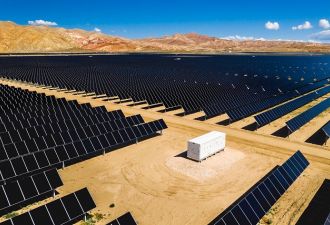
To be a leader in renewables again, California must tap the vast potential of the WDG market segment. WDG is comprised of 20-megawatts-and-under renewable energy projects that are interconnected to the distribution grid, with all energy production sold to a utility. A 20 megawatt (MW) project can fit in a relatively small area while delivering a considerable amount of power: 20 MW of solar PV, for example, fits on about 100 acres, while meeting the peak load requirements of roughly 20,000 homes.

Many countries around the world are deploying renewables at a far faster pace than California. Why? Better policies that unleash the enormous potential of WDG.  Germany installed more than 17 times the amount of solar that California did last year, despite the fact that California has a solar resource that is 70% more efficient.  And perhaps even more surprisingly, Spain's solar market continues to be more than twice the size of California's even though they have nearly identical populations and electric loads. 

Although the California Solar Initiative (CSI) is a reasonably successful program, it only applies to "retail distributed generation" (RDG), typically referred to as net metering.  RDG projects are constrained by many complications and the incentives only apply to projects up to 1 MW.  Hence, even if the CSI fulfills its highest expectations, it will only account for about two percent of California's total electric demand when the program ends in 2017.  In contrast, reaching California's 33% RPS mandate with solar by 2020 requires about 4 GW of new solar deployments every year.

Large-scale renewable energy projects, often referred to as "central station," have also failed to deliver the energy we need.  Central station renewables are generally dependent on transmission lines that take more than a decade to build.  In addition, the environmental battles over the conversion of remote pristine lands into massive energy farms tend to delay or kill these projects.

WDG provides the solution for renewables in California.  The relatively small size of WDG projects and their location within the distribution grid means these projects can be built immediately.  Furthermore, WDG projects can be financed and permitted with relative ease on rooftops and disturbed lands, without dependence on new transmission lines.  WDG avoids all of the constraints associated with net metering like limited on-site loads, non-owner occupied properties, split metered situations, and changing retail rates. 

WDG delivers the most cost-effective renewable energy for California ratepayers.  A CPUC study that is being revised to reflect the current pricing of solar is expected to show that WDG is a better deal for ratepayers than the large central station projects that require transmission build-outs and suffer the inefficiencies of transporting energy over long distances.  Hence, WDG is California's best hope for achieving its renewable energy goals cost-effectively and in a timely fashion.   In addition, WDG can begin delivering tremendous economic dividends for California in the form of immediate job creation and increased tax revenue. 

The easiest way to grow the WDG market segment is to implement a feed-in tariff (FIT), a widely proven policy mechanism for unleashing WDG.  Germany and many other countries have successfully implemented FITs, which are essentially pre-defined, pre-approved "power purchase agreements" (PPAs).  FITs remove barriers and parasitic transaction costs/time associated with solicitation processes, including auctions. FITs enable any party to own renewable energy facilities and get paid for the power delivered to the grid. The rate they are paid is set to make efficient projects profitable.  Numerous studies, including multiple from the National Renewable Energy Laboratory (NREL), have found that WDG FITs are far and away the policy of choice for scaling cost-effective renewable energy quickly. 

Since mid-2009, four WDG FITs have been implemented in North America: in Gainesville, Florida, the Province of Ontario, the state of Vermont, and the Sacramento Municipal Utility District (SMUD).  These four FIT markets are either deploying renewables far faster than any other region in North America or are staged to do so soon.

A WDG FIT represents a massive opportunity for California.  A recent study by the California Energy Commission found the potential for over 27,000 MW of solar projects that can connect to the existing distribution grid immediately. 27,000 MW is roughly ten times the total CSI goal and about half of California's peak energy demand. 

WDG is the answer.  The question is how long it will take California to exploit it with a comprehensive FIT that puts the state back into a leadership position.

***

Craig Lewis is the Founding Principal of RightCycle, a consultancy that achieves desirable smart energy outcomes via legislation, regulation, and public funding (grants, loan guarantees, siting incentives, etc.). RightCycle also assists clients with the critical project development activities of evaluating project site viability and securing off-take agreements via RFO proposals and PPA negotiations.

***

Also see this article on feed-in-tariffs.
 

12 Comments

  • Abhishek 05/19/10 10:15 AM

    With massive decline in module and installation costs , California is very near to grid parity compared to other countries due to its high electricity rates and insolation.The state has lost its pioneering position in the clean energy which was started by CSI .It is an ideal time of California to bring in Feed in Tariffs to regain its position as the leading user as well as incubator of clean energy.A large home market will benefit the Silicon Valley which is aggressively pushing into green energy.
    http://greenworldinvestor.com

    Reply
  • Good n green 05/19/10 2:31 PM

    California is losing it’s lead in part because it is so challenging for large projects to get permitted. Not one of the stand alone solar thermal projects under review by the California Energy Commission have been approved, and some have been in the queue since mid 2007.

    Reply
  • Barry Fitzgerald 05/19/10 6:02 PM

    If we went to wholesale distributed generation where would we put all those mini-powerplants? Well, it turns out that there are locations with sufficient land close to distribution points, not environmentally sensitive and sufficient for 26GW of generation! I think this is a no brainer, especially given it’s peak load potential.

    Reply
  • Maarten Lubbers 05/20/10 12:35 PM

    The province of Ontario in Canada has offered more than 2.5GW of capacity in large scale projects. Smaller project know as Micro-Fit (under 10kw) are also being awarded. Many companies are using campaigns to lease 1000’s of smaller projects in order to gain the larger incentive offered for smaller contracts and still achieve economies of scale. By placing the power generation on existing rooftops there is no ecological hardship. Perhaps this could be an additional option for the state of California.

    Reply
  • sorebird 05/21/10 9:58 AM

    Fits sound like they make allot more sense than a carbon tax does. Let the private sector Build Baby Build!

    Reply
  • Santa Cruz Green Watch 05/21/10 3:49 PM

    Some questions about numbers - to see if I understand.

    4GW per year, are you suggesting this your goal?
    If each installation has 20MW, we’d need 200 installations per year,
    If each installation has 2 MW, we’d need 2000 installations per year, etc.
    And below 1MW, you don’ think it will add up to enough.

    So how do you evision meeting 4GW each year.  What will urban landscape look like?

    thx.

    jim

    Reply
      • Bill 05/21/10 5:35 PM

        Jim, California is full of brownfield sites and old landfills that are ideal candidates for urban and rural solar PV WDG installations.  PV on these sites would me an improvement in most cases or the current appearance.  4GW per year from now to 2020 is what California would need to add in additional renewable energy to meet the 33% goal.  4GW/yr really catches your attention because it is a big number.  Its real relevance is that it highlights how woefully far off trend California is to actually meet its RPS mandate which is why effective WDG public policy in the form of a cost-based FIT is so badly needed.  Without a WDG FIT California’s chances of getter anywhere near its RPS mandate are slim to none.

  • Grandpa 05/21/10 7:17 PM

    Bill, you said it.  10 years is a long time, but waiting for transmission to be built within that time period without everyone scrambling over each other for a better place in the queue; not to mention all those wonderful installations on the drawing board which will never get built.  I echo your sentiment:

    California needs a cost-based FIT statewide right now.  PV projects just don’t magically happen.

    Reply
  • Garth 06/8/10 3:43 PM

    Just a question; why 1 mw and under? Why not level the playing field and make it 20mw<

    Reply
  • MKL 07/14/10 12:04 PM

    I’ve read a lot of articles extolling the virtues of WDG.  Could someone describe some of the arguments AGAINST WDG?  I understand that setting the level for a FIT is extremely difficult, but what are other challenges?  Are there issues with having thousands of MWs directly tied to the existing grid? Would upgrades be required?  Are there issues relating to reliability of all these small generators?  What are other issues?  Always helpful to get the arguments against an issue to build a strong argument for it.

    Reply
  • JoeJoe 07/14/10 10:34 PM

    The proponents of WDG are cherry picking their facts and offering slanted interpretations. Their spin doctoring of RDG performance is particularly maddening. Here’s a standard snippet from the FiT Coalition:

    “According to Ko, Retail Distributed Generation (RDG) and Net Metering models fail to deliver.  Retail DG doesn’t count to the RPS and ultimately doesn’t amount to much.”

    First off, Germany is doing very well in the RDG department. It’s a safe bet they’ll hit 4 GW/year of RDG any day now (if not already) and something like 8 GW by the end of the year. Mr. Lewis and Mr. Ko talk as if RDG can’t deliver at this sort of scale but real time data from Germany is telling us the opposite is true. Germany is actually moving away from the larger systems that the FiT Coalition is rallying for. The Chili Peppers and E. F. Schumacher had this to say about that.

    Around the world.
    I feel dutiful.
    Take a wife.
    ‘Cause Small is Beautiful.

    Check out the 2006 & 2008 data in this April 2010 gem from Lewis. It’s like a day without school on the FiT Coalition site.

    http://www.cader.org/documents2010/CraigLewis20100428.pdf

    The second problem with Ko’s statement is that RDG doesn’t count towards the RPS goal only because the RPS rules don’t make any sense. For some reason it’s ok to buy tradable REC certificates from Nevada without buying the underlying energy but it’s not OK to pay PV owners in California a credit for the renewable energy they produce in California. Using this uber-sham as an argument against RDG is lame.

    This FiT push looks like another Measure B or Prop 7. Lop-sided, strange and wrong. All these guys pinging the boards with WDG crap are lobbyists pushing an agenda paid for by clients. Tam Hunt (see Prop 7) is on board. There also probably a connection to… Meh… Gotta get down to the bunker now… Shine up ma tin hats and clean me guns.

    Reply
      • MKL 07/15/10 2:21 PM

        It seems like the problem with RDG is net metering.  Why not have a FIT for generators regardless of size?

Need an avatar? Get one here: Gravatar