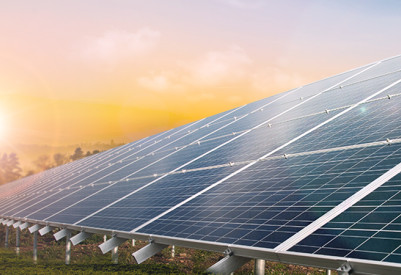


Los Angeles Mayor Antonia Villaraigosa unveiled an ambitious solar plan today that seeks to get 1.3 gigawatts of L.A.'s power directly from the sun by the year 2020.

If the plan and other programs succeed, the city will get approximately 35 percent of its power from renewables. Right now, L.A. only gets around 10 percent from solar, biomass, wind and other renewable sources (not including large hydroelectric dams.). The 35 percent mark would even surpass the overall goal the state has set for itself.

The plan breaks down into three elements. One segment will revolve around homes. The city's goal is to get consumers to put 380-MW worth of solar panels on their roofs by 2020. Homeowners that can't afford their own panels will be able to buy shares of solar power plants.

To help encourage demand, the city will try to implement a feed-in tariff under which consumers could sell power to the Los Angeles Department of Water and Power (LADWP). Right now, most consumers in California get credits from their utility for providing solar power. Feed-in tariffs, like those that have been implemented in Germany, are more lucrative and tend to stimulate demand. Under the program, consumers would likely be able to sell their solar systems to the city after five to eight years.

Additionally, the city will install 400 MW of photovoltaic panels on its own structures by 2014. LAWDP will also secure 500 MW of solar thermal capacity in the nearby deserts.

Why solar? L.A. enjoys 276 days of sunshine a year, according to the mayor's office. Solar would also help cut down on the city's notorious smog. In 2004, L.A. emitted 50 million tones of carbon dioxide, more than all of Sweden. Although a huge portion of that carbon dioxide comes from car tailpipes, power plants contribute mightily to the mix. 76 percent of L.A.'s electric power comes from coal or natural gas.

The mayor's office also estimated that 200 to 400 jobs would be created for every 10 megawatts of solar installed. That might be a tad high -- the complete program under those figures would come to 27,000 to 50,000 jobs. Still, installing solar systems remains a big construction job. Electricians, manufacturers and contractors will be some of the biggest beneficiaries of the greentech economy.

By the way, L.A. uses about 6.1 GWs on peak summer days and 5.1GW on an average summer day. Gross power consumption typically climbs annually, although in California per capita power consumption has stayed roughly level since the 1970s.