

Forget the solar panels, micro-wind turbines and geothermal wells. Instead, think central air retrofits, rainwater capture and waterless urinals.

That's one takeaway from real estate management firm Jones Lang LaSalle's experience in making new and existing buildings more energy and resource efficient.

It's well known that simple steps like replacing light bulbs and old boilers tend to offer the fastest paybacks when it comes to building energy efficiency projects.

But the pressure to keep paybacks on such projects to less than five years can really focus the attention, noted Diane Vrkic, COO of Jones Lang LaSalle's Energy and Sustainability Services Group. She spoke at a sustainability conference hosted by Wesco in San Jose, Calif. on Thursday.

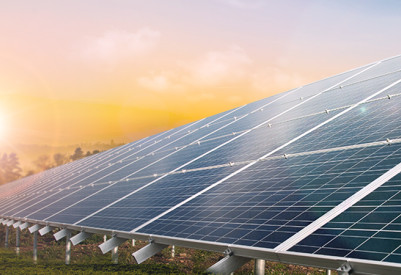
That's the upper limit that Bank of America put on its plans for its One Bryant Place tower in New York City. After looking at solar panels – a 65-year payback! – and wind and geothermal power, which didn't meet those requirements, the firm turned to more traditional efficiency moves, she said.

That includes waterless urinals that save about 3 million gallons of water a year, as well as a rainwater capture system, she said. Both help reduce the building's water use by about 9 million gallons per year, she said.

Of course, given the state of the economy and commercial real estate, "We won't spend much time on new construction, as there's very little of it going on and there won't be for the foreseeable future," she said.

So she also brought up the firm's work on retrofitting the Empire State Building for efficiency. Once again, that retrofit avoided solar panels and other high-cost items in exchange for improvements like a more efficient chiller and systems for informing tenants of their energy use in real-time, she said.

Those improvements are expected to save the building about $4.4 million a year on its energy and water bills, a 38 percent reduction that should off the cost of the project in about three years, she said.  

An often-cited factoid is that buildings use about 40 percent of the energy generated globally and generate nearly half the world's greenhouse-gas emissions. Green buildings can cut those stats by up to 50 percent, said Dan Geiger, executive director of the U.S. Green Building Council.

But green buildings can also save a lot of water – about 40 percent compared to traditional construction – and reduce solid waste output by up to 70 percent, Geiger said.

With billions of dollars of federal stimulus funds aimed at improving those statistics – $4.5 billion to retrofit federal buildings, $3 billion to grants for state energy efficiency programs and $5 billion to assist weatherization of homes for low-income families among them – it's likely building energy efficiency will be a much busier industry than in the past (see Making Building Automation Brainier, DOE Doles Out $780M for Weatherization and Green Light post).