• Friday, November 20, 2009 Latest Update: 4:41PM

Viewing posts tagged "Around The World"

Rob Day | October 1, 2008 at 4:40 AM

Cleantech in Oz (see also: Ausra)

As word comes out today about Ausra's $60.6mm Series C (we'd mentioned the ongoing raise back in August), it's a good time to check out what's going on in Australian cleantech these days.  I'd asked Aaron Fyke of Starfish Ventures if he'd be willing to write a few words on the subject, and he'd graciously agreed:
I’m pleased to be given the offer from Rob to comment on the cleantech venture capital industry here in Australia. I am a partner with Starfish Ventures, Australia’s largest venture capital firm, and one of two partners who focus primarily on cleantech investments. I run my own blog (www.aaronfyke.com), which I use to comment on the Australian startup community – with a particular focus on cleantech.

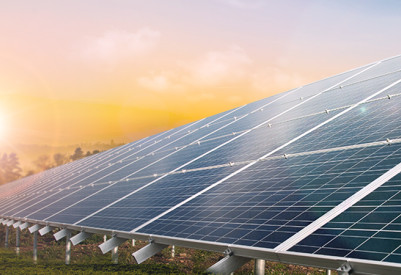
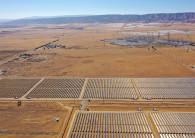
This post comes at a time when we are particularly pleased about our participation in the recent round of funding for Ausra, a concentrating solar thermal company which originated here in Australia. Ausra has been a fantastic success, and is indicative of the types of cleantech opportunities that exist here. In many ways, Australia is a great fit for cleantech companies. Australia has huge solar, geothermal, wind and wave resources, remote communities ideal for distributed power generation with high energy prices, and a long-ongoing drought which has focussed the population, and entrepreneurs, onto water efficiency and recycling. However, a particular facet of the industry which can be both a positive and a negative is Australia’s very large, entrenched, coal industry that has been booming due to growth in export markets. This is a positive because coal is a major source of carbon globally, and solutions being pursued here to mitigate coal pollution have huge potential applications. Tremendous resources are going into carbon capture and storage development. As well, solar thermal technologies (like Ausra’s) can be used to augment thermal power plant production, allowing the same amount of electricity to be produced, with reduced carbon emissions, at extremely competitive costs. The negative of the coal industry influence is that it has previously had a dampening effect on government policy.

In the past there have been political difficulties brought about through Australia’s dependence on the coal industry. During the Howard administration, government policy was not supportive of energy technologies which would compete with coal, nor government regulations which would limit carbon output or put a price on carbon. “I'm not going to agree to prescriptions that are going to cost the jobs of Australian coal miners,� he said in March of 2007. Australia joined with the US in being the two developed countries not to ratify Kyoto. However, when Kevin Rudd took power as Prime Minister in December, 2007 his first official act in his first day of office was to ratify the Kyoto Protocol. Since then the government has been rapidly moving towards implementing an emissions trading scheme, and has implemented numerous grant programs to develop renewable energy technology.

Australia has historically been fantastic at developing IP and technology, but poor at commercializing it. Many universities and government research facilities are actively targeting the cleantech sector. Many standouts, such as the solar program at the University of New South Wales (UNSW), are recognized as being global leaders. However, in addition to IP, successful companies need access to an experienced team. The quality of entrepreneurs in the cleantech space has been improving for a number of years now (both here in Australia, and in the rest of the world), and the cleantech dealflow is moving away from hobbyists and backyard inventors towards more experience executives. The excitement and fervor in the entrepreneurial community is matching, in pockets, anything I had seen in the US. It is these kinds of teams that we at Starfish are actively pursuing and are very optimistic that the quality of dealflow will continue to improve given the factors cited above.

Given Australia’s smaller domestic market (21 million people) means that early stage companies are naturally geared here to think globally, as it is the only means to reach scale for a technology business. Australia provides an excellent test market for new technologies. A typical strategy used by Starfish Ventures is to invest in a local technology company, use the local market to get initial market traction, and then take the company global to access larger markets and further rounds of funding. Roughly a third of our current portfolio are US companies that originated in Australia. This is a necessary strategy in a country that has been plagued by the “tyranny of distance�. As the world shrinks, expect to see more Aussie-started, VC-backed companies in the future.

It's also worth noting that Ausra has been one of the "solar IPO markets" set up on InTrade, although trading has been pretty anemic so far.  Maybe today's news will kick-start it a bit?

Rob Day | April 11, 2008 at 4:47 PM

Odds and ends at the end of the week

A few things of potential interest…

  • A good tool for all you cleantech VCs and Founders out there:  Joel Moxley, an EIR at Northbridge, came up with a pretty useful prior-art search engine, PriorSmart.  Check it out.

Deals from the past week:

  • Evolutionary Genomics, which is developing biofuel feedstocks with improved yields, has raised a round of financing (amount undisclosed) from Altira Group.
  • Jonathan Shieber at VentureWire wrote today that AMR developer Silver Spring Networks has raised an additional $17.4mm in what appears to be an insider Series C extension (with members from existing investors Foundation Capital, Edison Electric Institute and JVB Properties participating).  The original Series C was previously reported to be $40mm, last year.
  • Brighter Planet, an online clean energy services and info provider, raised a $3.2mm Series B.  Crow Hill Ventures led the round.

Cleantech regional updates:  Here’s a good article on all the various efforts around the U.S. to create new cleantech clusters…  And then I thought this recent comment by Tim Chapman (who writes the Clean Ventures blog focusing on UK cleantech investing) was worth elevating for everyone—his response, after I had previously mentioned an article lamenting the dearth of venture capital in his neck of the woods:

That Independent story on the UK VC scene is a little overblown - 3i’s been doing next to nowt in the early-stage space for years, so their recent announcement just confirmed what everyone knew. Established firms move up-market - it’s always happened, and will continue to do so. Anyway, 3i’s not symptomatic of the UK market - they’re adamant they’re a global player, so the move should say as much about the global market as the domestic.

The figures show an increase in seed and early-stage deals, at least up till 2006, for the UK and Europe. It’s not as active a market as in the US, but it’s still in relatively good shape. Interestingly, a fair few low-end investors I’ve spoken to say that the problem isn’t in VC supply, but in demand - there’s barely enough quality early-stage businesses to take the money that’s currently in the market. Maybe that says something about the appetite for risk, or quality of entrepreneurship, but I don’t think lack of VCs is the problem.

Thanks much, Tim.

Finally, it’s not really about the venture capital side of things, but I thought this interview with David Kurzman of Panel Intelligence was interesting.

Rob Day | March 27, 2008 at 7:19 AM

Will soot improve the prospects of cleantech efforts in the developing world?

It was fascinating to see this new study come out, suggesting that soot from deforestation, home cooking fires, coal-fired power, etc., has a significant role to play in climate change.  What was particularly important as a takeaway was that soot is more readily addressable as a near-term climate change driver.

We all see entrepreneurial efforts to get cleaner-burning fuels and equipment implemented across developing economies—in the last few months I’ve seen plans for solar cooking stoves, rice husk-fired generators, and microbial fuel cells, all with the idea of bringing electricity and heat to various developing regions, while minimizing the use of “dirty” biomass fuels more commonly used today.  For many investors with a North American focus (such as myself), these and other regions are simply not part of our funds’ investment mandates, but even for investors with a global mandate these investment opportunities can be difficult to get behind.  Lack of proprietary technology (a solar cooking stove, for example, is essentially just a polished metal reflector), highly scattered target customer base, and low purchasing power leading necessarily to low prices—all of these and other reasons are why institutional venture capitalists haven’t traditionally targeted these “bottom of the pyramid” investments.  It’s a capital gap—and an important one, because there are some significant needs out there in terms of sustainable development and the role that technology (even “low-tech”) can play.

If (a big “if” at this point) efforts to replace high-soot activities with low-soot activities can gain momentum because of its potential for immediate impact on climate change, perhaps this could help bridge that gap.  Large organized efforts to bring about such shifts could mean—from the entrepreneur’s perspective—a few large buyers instead of a billion scattered customers.  The efforts around the $100 laptop are an example of this.  That would potentially help VCs get comfortable with the scalability of some of these opportunities.  In terms of most of the better solutions to soot being relatively low-tech, VCs investing in developing regions are already learning that winning investments there are often those with better execution instead of cutting-edge technology.  And finally, if the benefits of lower soot levels are felt equally by those in developed AND developing economies, this could also help create additional value creation opportunities beyond just selling the equipment itself at affordable prices—something akin to carbon credits, perhaps.

None of this is to minimize the impacts of atmospheric carbon emissions, it would seem.  But if soot can become a focus of those worried about near-term climate change, perhaps it could end up having some beneficial impacts on developing economies and the VCs who are investing in them.

Deals and news from the past week:

  • Very late to mention GMZ Energy, the thermoelectric material startup that emerged from stealth mode last week.  As part of that PR effort, the company revealed an undisclosed amount of seed financing from Kleiner Perkins.
  • Jonathan Shieber at VentureWire mentioned this week, in an article that covered all of the recent activity in energy storage, that stealth battery storage company Seeo has taken in “nearly $1mm” in financing from Khosla Ventures, following on another $1mm financing back in April 2007.
  • Cleantech investors in the news:  Jonathan Shieber at VWire also reported yesterday that Generation Investment Management is entering the cleantech venture space, raising a targeted $400-600mm fund.  Generation IM is already connected with a few high-profile investors you may have heard of before…  and also boasts one of the smartest investors you probably haven’t heard of, Duncan Austin.

Other news and notes:  Lux Research brings another gloomy perspective to forecasts about the solar market over the next couple of years…  Another cleantech cluster in the making?  Colorado State kicks it in gear...  And finally, on that same story, what kind of “tricycle” doesn’t have three wheels, anyway?

Rob Day | February 20, 2008 at 6:22 AM

More money for Tesla

Last week Tesla Motors closed on another $40mm in bridge financing co-led by Chairman Elon Musk and Valor Equity Partners—haven’t seen yet anywhere if other investors took part, but it wouldn’t be surprising.  At the Piper Jaffray Clean Technology and Renewables Conference in NYC, where a Tesla Roadster is parked right out front in the Madison Ave. courtyard of the New York Palace, the company presenter also mentioned that they have a “clear path to our Series D E later this year,” which the FT reported could be as much as $250mm including equity and debt, “and an IPO next year,” which may also be part of that $250mm total.  I think I also heard the presenter say that Musk now owns 40% of the company, which would be surprisingly high to me, but as always yours truly is no journalist—I could have heard wrong on any of the above, so happy to correct that if so…

I look forward to my test drive.

Cleantech investors around the world:

Other news and notes:  More on the ongoing corn-based ethanol debate...  Neal identifies the low-hanging fruit...  And finally, uh oh, looks like I’m out of a job.

Rob Day | November 6, 2007 at 2:13 PM

Update:  The sky is falling

Not really.  But several pieces of sobering news from the past couple of days:

  • They say that more wars have been fought over water than oil.  Even if that’s a now-dated statement, it still highlights the environmental, humanitarian, and national security implications of this report from SRI Consulting that concludes that global demand for water will exceed supplies by 56%... within 20 years.
  • Then there was this nugget regarding long-term oil production forecasts from the head of French oil giant Total“100m barrels [per day]...is now in my view an optimistic case. It is not my view: it is the industry view, or the view of those who like to speak clearly, honestly, and not…?just try to please people.”  Bear in mind that the IEA and the USGS are forecasting 116+ mbpd to meet demand under “business as usual” by 2030, up from around 85mbpd today.  Don’t expect oil prices to go into any sustained decline anytime soon, in other words…

So we can expect severe water, fuel and electricity supply challenges… Which seems like a good segue into the past week’s cleantech venture deals:

  • Khosla Ventures and BIOeCON have joined forces in a Series A to form KiOR, another developer of lignocellulosic biomass-to-fuels technology.

Cleantech cluster news:  Massachusetts takes a big step toward renewable fuels standards...  Seattle VCs may be missing out on cleantech (for now), but the region is ripe for investment…  And here’s an article on the biggest “cluster” of all.

Other news and notes:  Tyler is also on the “down” news cycle, with questions about the viability of fuel cell cars and EEStor...  Here’s a useful overview report from Deutsche Asset Management (note: opens large pdf)...  Finally, the perfect gift for anyone who enjoys combining portable electronics and heavy breathing.

Rob Day | September 18, 2007 at 4:55 PM 1 Comment

European cleantech VCs see 50% IRRs?

That’s the conclusion of New Energy Finance in a new analysis they released today.  They studied 129 clean energy investments in Europe by 37 investors and found 15 IPOs, 10 trade sales, 21 up rounds, 19 down rounds or write-downs, and 10 liquidations.  All told, they estimated a 54.9% gross annualized return across the portfolio of 129 companies.  The study period covered 1998 to the present, and included an estimate of 1.2x valuation on unrealized gains on funds invested.

It’s a very positive study, certainly, and helps further illustrate why investors are so keen on this sector right now.  It’s also a very useful analysis—but it’s important to note a lot of caveats involved.  The methodology is hard to figure out from the press release alone, but it’s clear there’s a lot of potential for some data bias (while it’s impressive that 37 investors participated, it looks like the study only covered about half of relevant investments; and as well, it appears the study relies somewhat upon self-reported data from the investors).

I’d also like to see more information about the way that “unrealized holdings, calculated on an industry-standard, conservative basis, are valued at 1.2 times the total funds invested.”  It’s unclear, but in light of the statements that 35 exits have returned 1.4x the funds invested, and the total estimated gains are 2.6x (1.4x + 1.2x), it seems like there’s an implication that the ~75% of funds invested that have NOT led to exits may be assumed to have seen some pretty nice paper gains.  We may ask the good folks at NEF to write up their methodology for benefit of readers at some point…

Before we all pat ourselves on the back about the healthy returns in this sector, in any case, consider the following:

One funding announcement so far this week:  Pentadyne has closed on a $14mm round of financing, led by Loudwater Investment Partners.  GTM’s Rachel Barron reports that the capital will go toward sales channel and product development.  Jonathan Shieber at Dow Jones pointed out in CTI that the PR described it as a “recapitalization,” and wondered about the company’s previously-announced AIM IPO plans.  It’s unclear from the PR whether existing investors participated in the latest financing, which brought total investments in the company to about $60mm.

Other news and notes:  Cleantech is heating up in Australia, too…  And finally, it’s not cleantech, really, but how about $20mm to put a robot on the moon?

Cleantech Investing

Rob Day is a Boston-based cleantech venture capital investor and entrepreneur, and is also the President of the Renewable Energy Business Network (REBN). The views expressed on this blog are those of Rob and his friends and colleagues, not necessarily the views of REBN or Greentech Media or any other group. Contact Rob Day at: (JavaScript must be enabled to view this email address)

.