
Okay, so maybe I jokingly tried to start an "ARPA-E" chant at Obama's MIT speech on Friday, simply because I thought it might be the only crowd ever wonky enough to get it.
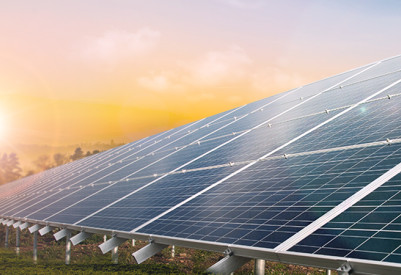
But acronymical joking aside, it's a potentially valuable DOE program that could end up helping one of the major capital gaps that's emerging in cleantech venture capital: Seed stage and early stage development of ideas that are promising but will take too long to commercialize than most VCs can handle.
So it's great to see the news release today with $151M of grants to 37 efforts. Including:
- Sadoway's liquid-metal batteries
- Low-cost LED crystals
- 1366's "mono-equivalent silicon" wafers
- FloDesign's smaller-format wind turbines
- Foro Energy's drilling technology
- And several direct sunlight-to-fuels efforts
On a completely different note, I recently re-read an old 2000 article (I can't find a direct link, but you can access it through this site) from Environmental Finance back in April 2000, where the authors (Byron Swift and Aldyen Donnelly) argued that there's enough inefficient coal-fired generation out there in the U.S. that under a cap-and-trade system there will be a natural limit on CO2 credit prices at around $5-7/ton. I'm interested in reader reactions, critiques, corrections, etc., please email or use the comments to share with alll...
Swift and Donnelly simply look at the implied financial worth of the generating assets of companies like AEP, Southern Company, and Cinergy (remember, this was from 2000), and then divide that by their CO2 emissions in terms of earnings per ton of CO2. And therefore, they argue, if you're AEP and you can make more money by shutting down an inefficient plant and selling the avoided emissions, you would do so, and that would be triggered at around the $5-7/ton level. They also looked at it from another perspective -- market capitalization for each of the companies, estimating how much of that was attributable to the fossil fuel generation fleet, and then dividing by emissions to get a value for perpetual stream of carbon allowances (discounted). Both methods came out with about the same value.
Now, what they don't account for, as far as I can tell, are three crucial additional factors: 1) the shut-down costs associated with mothballing a generation facility to sell off the avoided emissions; b) the incremental cost of replacing that generation capacity with something else with much lower carbon impact, such as gas-fired generation (although they acknowledge this as an open question); and c) short-term volatility as separate from long-term average prices -- it's tougher to shutter a generation plant because of temporarily-high carbon prices, so there could certainly be significant price spikes above the limits Swift and Donnelly indicate.
But I find it a fascinating analysis, given the policy discussions going on right now (which include possible hard caps on carbon credit prices under a cap-and-trade plan), in that it suggests there may be a lower natural price limit than many expect. There's definitely precedent from elsewhere in the electricity business for electricity customers to curtail their demand and sell the capacity back to the utility -- see EnerNOC, or in an early example, Kaiser Aluminum (note: pdf). Why couldn't some power plants shut down and re-sell their credits for greater profit? Whether you love or hate the idea as an electricity consumer, it does open up a new business dimension for anyone in the powergen industry to consider...
Curious to get readers' thoughts.