
There's been too much blind faith within the cleantech venture sector on proprietary technology as the primary way for startups to create a competitive advantage.
Certainly, holding a defensible patent can help a startup with a cost or performance advantage to maintain that advantage over time. Proprietary IP has been part of the success story of early cleantech "winners" such as First Solar, for example.
But the pursuit of such proprietary technology can be very expensive -- in both direct and indirect ways.
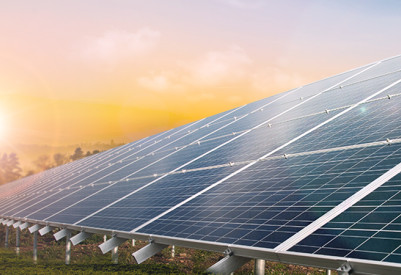
First of all, it can be expensive to develop and commercialize products based upon truly differentiated core technology. Thin-film solar is again another example of this. From successes like First Solar to to-be-determined stories like Nanosolar, MiaSolé, Solyndra, etc., the pursuit of proprietary manufacturing techniques has meant having to invest hundreds of millions of dollars and years of effort in developing manufacturing equipment and techniques, all mostly from scratch.
But indirectly, there's also a significant cost from trying to be secretive during the development process, out of fear that larger established competitors will be able to steal (or just borrow from) the tech sooner than the startup can get out to the market. This is the not-often-discussed downside of a company remaining in "stealth" -- it's tougher for the startup's technologists to get outside input on alternative approaches that might improve their tech, and for the startup's bizdev / senior management to know how best to position their product when it's ready for the market. This can increase the chances that the startup develops a product that, by the time it's ready, has been leapfrogged, or that simply doesn't meet customer needs for other reasons. When in the pursuit of proprietary tech, the startup remains insular for a few years -- and this indirect cost can have significant impact.
Furthermore, none of the above fits very well with the current cleantech VC rhetoric about "capital-efficient" businesses.
But there are other ways to create a sustainable competitive advantage. A startup can build a key set of channel or customer relationships that would be hard for a follower to wrest away. A startup can build in a level of integration with customer processes or products that would be tough to un-do. Brands can be built and utilized. There's even a form of "capital momentum" that we've seen where an early market leader uses their position to raise a lot more capital, including perhaps via an IPO, than their competition. And then they'll be better-positioned to grow more quickly than those competitors. EnerNOC was an example of a firm using this kind of approach.
One key way of creating a defensible competitive advantage that I'm increasingly seeing deployed by cleantech entrepreneurs is market partnerships. In many cleantech markets, the value chains have certain chokepoints where there's a high level concentration of component or product vendors. And given the increasing interest in the corporate world around cleantech as a growth market, often these larger companies have aspirations (and sometimes even have launched their own products and services) to get into cleantech markets.
Over the past couple of years, I've seen a lot of cleantech startups seek to develop sustainable competitive advantages in the marketplace by forming partnerships with these larger players.
Most often, it's a partnership where the larger player is helping the smaller company to commercialize their proprietary technology. Forming a JV to build a first commercial production plant, for example. This can help with some of the challenges mentioned above in developing a proprietary technology.
But what I find more interesting are the partnerships I'm seeing where the startup works with entrenched upstream companies. Product manufacturers in traditional product lines (like, for instance, lighting products) who are developing new products based around emerging technologies (so to continue the lighting example, LEDs), but realize that their existing channels and sales models don't do a good job selling these new products. So a startup comes along with a system integration play, or a business model innovation, and is able to establish an exclusive relationship with the larger vendor.
These and other examples are pretty interesting ways that cleantech startups with or without proprietary tech are creating competitive advantages not based on patents, but instead based on market dynamics. For the startup, it's a lot more capital-efficient and speedy than developing a brand new technology from scratch. And it also takes advantage of existing value chains, rather than attempting to disrupt existing value chains -- and when these energy, etc., value chains are 100 years old or so, they have a tendency to resist disruption.
Now the question is, will cleantech VCs be open to such non-tech approaches to creating sustainable competitive advantage?