
Today's Date: Friday, November 21, 2008
Large: Continued
Bullet ArrowPosted: September 6, 2007 - 2:00 pm (EST)

In the last year, a number of large-scale solar thermal projects have sprung up, with San Francisco-based utility Pacific Gas and Electric signing a deal with Israel solar-thermal company Solel for 553 megawatts of power, and Spanish renewables producer Acciona Solar Power going live with the 64-megawatt Nevada Solar One. Projects are also underway in Spain, Morocco, Algeria and Egypt, among other places.

Proponents say concentrating solar-thermal projects like these have the potential to cut costs far lower than photovoltaic panels.

According to the U.S. Department of Energy, solar-thermal projects delivered electricity for between $0.11 and $0.18 per kilowatt-hour in 2000, compared with between $0.24 and $0.30 per kilowatt-hour for PV. Of course, solar-PV competes with retail electricity prices, while solar-thermal projects would sell at wholesale prices to utilities, so it's not an apples-to-apples comparison.

But even as he insists that solar-thermal and photovoltaics aren't competitors, van der Vleuten said the pricing hierarchy will change. "I'm very much convinced that PV is, for the long-term, the best option."

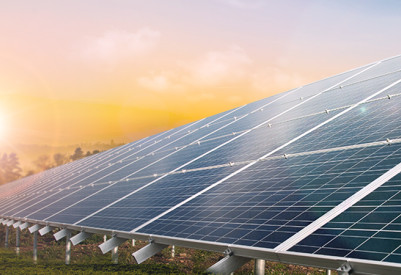
Large photovoltaic technology has the potential to drop costs 15 to 20 percent per year, and concentrating solar-thermal - despite being cheaper today - doesn't have that long-term cost-cutting potential, he said.

Photovoltaic projects are more modular, meaning the panels can be the same for a smaller project as for a larger one, and, because of this, can start out small and grow, meaning the entire project cost won't need to be fronted right in the beginning, he said.

Roberto Vigotti, chair of the IEA Renewable Working Party, said he thinks the world needs both technologies.

But he added his agreement that concentrating solar-thermal power has less room for cost-reduction. "PV one day will be delivered like a pizza," he said.

Ty Jagerson, vice president of corporate development of SolFocus, a startup with technology to use lenses to focus sunlight onto smaller solar cells for residential and commercial projects (concentrating solar PV), also was in attendance.

He said he agrees with the IEA task force that the price-cutting potential is there. At the same time, he said, "fundamentally, PV has to compete with [concentrating solar-thermal] at a basic cost point, and there's not a consensus within the industry whether PV can do that." Of course, he said he believes SolFocus' product can be price-competitive.

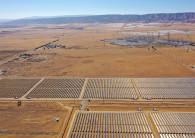
The task force is now looking for ways to help bring large-scale desert projects to reality.

Copyright © 2008 Greentech Media, Inc. All rights reserved.