• Tuesday, July 7, 2009 Latest Update: 12:03PM

Greentech Solar

Solyndra Adds $238M Contract, Brings Backlog Total to $2B

The CIGS solar company has inked a deal with Umwelt-Sonne-Energie, one of a growing list of buyers in Europe. No update yet on Solyndra's new factory plan.

Solyndra just added one more contract to its already ballooning backlog: The thin-film solar startup has signed a $238 million deal with Umwelt-Sonne-Energie in Germany.

The Fremont, Calif.-based Solyndra now has more than $2 billion in contracts that it plans to deliver over the next several years, the company said Tuesday.

The agreement with Umwelt-Sonne-Energie in Germany would last through 2013.

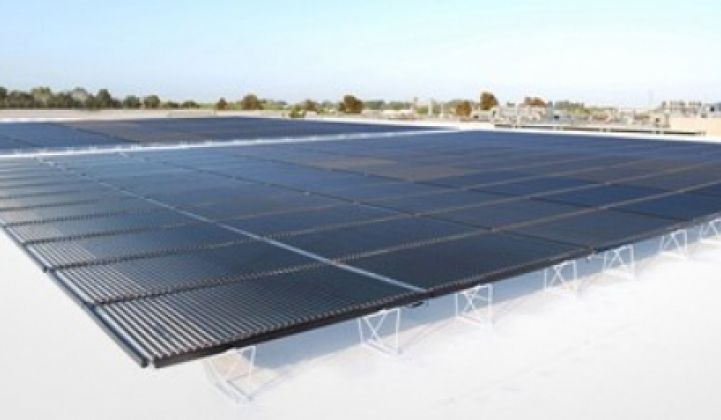
Solyndra, founded in 2005, began to discuss its technology and product publicly last fall. Instead of a flat-plate panel, the company's module is made up of a series of tubes that contain solar cells. The solar cells make use of copper, indium, gallium and selenium (CIGS) for converting sunlight into electricity.

Solyndra is one of a handful of CIGS companies that have rolled out commercial products. Its target customers are businesses rather than homeowners.

It's not just the unusual design that has garnered Solyndra a lot of the spotlight. It's the combination of the panel design, along with its racking system, that makes it able to shave installation costs for installers, said Andrew Skumanich, founder of SolarVision Consulting in Silicon Valley and a former executive at Applied Materials and Innovalight.

The tubes are placed an inch apart in a frame, so it's more wind resistant than conventional solar panels and can withstand winds up to 130 miles per hour, Solyndra's CEO Chris Gronet said last fall (see Solyndra Rolls Out Tube-Shaped Thin Film).

A Solyndra system is meant for flat or only slightly tilted rooftop, and its racking system doesn't require ballasts or roof penetration for anchoring, the company said.

A growing number of solar startups are devising new designs for panels and racking systems or other designs to reduce material and labor costs. Rackings make up about 10 percent of the installation costs

Armageddon Energy, for example, has developed hexagonal solar panels and a triangular frame to go with them (see An Idea for Solar?). Solar Red also has designed a racking system that its developers say would make installing panels a snap (see Getting Solar Energy Cheap and Easy).

Solyndra has attracted a good number of European distributors and installers so far. Aside from the deal with Umwelt-Sonne-Energie, its previously announced deals included a $115 million supply agreement with Ebitsch Energietechnik in Germany, a $189 million deal with SunConnex in the Netherlands, and a $250 million contract with GeckoLogic in Germany. One of its first customers was Phoenix Solar in Germany.

Umwelt-Sonne-Energie does business in Germany and Eastern Europe.

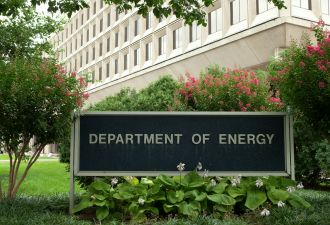
Solyndra is set to receive a $535 million loan guarantee from the U.S. Department of Energy for building a 500-megawatt factory near its current headquarters. The loan guarantee would enable the company to borrow money from the Federal Financing Bank.

The DOE announced the loan guarantee in March this year, and Solyndra hasn't said whether it has secured the money to begin construction. The company said earlier that it would like to start building by the end of this year and start delivering panels from the factory in early 2011.

The company already has a cell and panel factories with capacities to produce 110 megawatts of solar panels per year, but the company hasn't disclosed whether it had achieved that production rate. 


Join experts and influencers at Greentech Media's Growth Opportunities in the New PV Market: Projects, Finance and Policy in San Francisco on July 13.
Comments [12]

  • Steve Pluvia 07/7/09 2:27 PM

    Solyndra needs to improve their efficiency & reduce their installed cost before any of these contracts get filled.  At this point solyndra is a few steps ahead of being deemed “opti-solar II”.  The primary difference between the two is Solyndra has a viable commercial production facility (optisolar didn’t), but they have non-competitive a-si level efficiency and c-si costs.  Nobody’s going to buy solynda product when they can buy panels with 2x the efficiency (c-Si) at the same or lower installed costs.  Solyndra needs to sell at $150/watt +/- .25 or $3.00 installed cost including inverter to be a viable company based on their product’s performance and lack of viable long term warranty.

    Reply
      • EAB 07/8/09 7:22 AM

        Does Solyndra actually produce thin film? or just the tubes/panels? If they do not, who is their supplier?

      • Ucilia Wang 07/9/09 6:34 PM

        Hi EAB, Solyndra makes its own films. There is an inner tube within each outer tube. The CIGS cells are deposited on the exterior surface of the inner tube.

  • semiconductor_rep 07/7/09 7:41 PM

    Steve - might I ask how you happen to have this info on Solyndra? Friends in high places?

    Reply
  • rooferguy 07/7/09 7:53 PM

    Call me stupid, but I fail to understand how glass tubes spaced 1” apart can collect more solar radiation than a flat plate solar panel.  Then tilt the flat plate a bit and it does even better than tubes.  That stuff about bottom reflection is nonsense to anyone who’s been on a roof that’s not brand new.  Once the sunlight shines through those 1” spaces it’s almost all gone.  Steve’s comment about efficiency is also spot-on.

    The two problems they are trying to solve—silicon is expensive and racks are troublesome — have already been solved.  Silicon is $60/kg now, and we’re routinely installing 14%+ efficiency rooftop systems that go together in a snap, need no ballasting, no roof penetrations and no racking.

    Reply
      • Steve Pluvia 07/8/09 1:05 PM

        Rooferguy, Nanosolar’s Rothstein has an intelligent review of the tube/solyndra technology on the nanosolar blog found at their website.  Some of Rothstein’s objections are offbase imo, but many seem accurate.  Bottom line, I know people with these systems installed on their roofs and they work.  They also have a distinct advantage of a complete, automated commercial production line.  Materials in the front, product out the back; not batch processing like every other CIGS start-up is now doing.  That said, they’re not so honest about their efficiency levels.  They report efficiency of their thin film on a flat surface, but refuse to disclose their efficiency when rolled in a tube and placed on their racks.  Simple math tells you they’re in the 6ish range +/-1%.  That means they must compete with First Solar on price, specifically they must undercut First Solar as Solyndra has 1/2 the efficiency, no warranty record, operating history or history of product performance.  That means financing systems built with their product will be tough and expensive.  Sounds like a tough road to profits for these guys.

  • Alternative Profits 07/9/09 10:28 AM

    How come Solyndra has over $2 billion in contracts if their technology has so many questions over it?

    By the way, the contracts that are mentioned - are they just MOUs (which are really nothing but a piece of junk paper) or hard contracts (that have clear legal obligations attached to them)?

    One problem many folks evaluating these startups are facing is the huge number of such PRs that the companies release. Sure, a few people can differentiate the hype from reality, but to most, they do not know what to believe and what not to. And the truth is, computing the final costs and benefits is a fairly cumbersome exercise that requires a good amount of solid data, and most of these companies are short on details.

    NS @ Alternative Energy Profits - http://www.altprofits.com/blog

    Reply
      • rooferguy 07/9/09 10:41 AM

        Many of these contracts are pie in the sky.  Literally.

        For example, there’s the deal that PG&E has to buy electricity from a satellite power system that will beam the energy down to a collector somewhere near Fresno.  I thought this was a joke but ... there is a contract.

        Don’t know about Solyndra’s contract, but big deals for unproven technology raise questions.  Obviously there are major assumptions about performance, reliability, costs and O&M.

      • Steve Pluvia 07/9/09 2:03 PM

        Huge contracts mean dik and are often a red flag.  These bs prs are often used as hype to hook fish and close financings.  See OptiSolar history as one of many examples in this space.

      • Ucilia Wang 07/9/09 4:49 PM

        Solyndra calls them “long term sales contracts,” but, as you know, it isn’t divulging details. I did call for more info, but didn’t hear back.

  • Adi 07/9/09 3:25 PM

    When Solyndra started, they targetted $3.5/Watt.  Now you can get Crystaline PV panels close to $2/Watt, and going to $1.5/Watt in 2010.

    Their whole business model is upside down, and their current cost per Watt (at the existing yield levels), is above $10/Watt.

    Great PR, lots of hype, and suprising (really???) funding from the DOE.  How does the DOW make its decisions on where the money goes?  Seems to me this will be another one of those bad sotries.

    Reply
  • insider 07/10/09 9:31 AM

    The efficiency issue is a bit overrated. There are elements in the design that can mitigate this. But the asking price is still too expensive for the US.

    I have heard too rumors about running costs > $8/Wp, but who knows how substantiated they are, and whether the costs are just opex or they include capex amortization as well.

    Reply
.