DOE Doles Out $780M for Weatherization

The federal energy department is releasing the money in the next few days as part of the $8 billion effort to fund states and local programs for saving consumers energy costs and making government buildings more energy efficient.

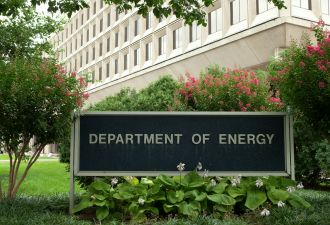
Over the next few days, the U.S. Department of Energy will release about $780 million to fund state and local programs for weatherizing homes.

The money is part of the $8 billion set aside by the stimulus bill to create jobs while helping consumers cut energy spending. Energy Secretary Steve Chu and Vice President Joe Biden held a press event at the White House Thursday morning to announce the funding.

The DOE said states will have to deliver results in order to receive additional funding from the $8 billion pot, which includes $5 billion for the Weatherization Assistance Program and $3 billion for the State Energy Program. The federal government aims to create jobs for 87,000 people and save hundreds of dollars per year per family.

The weatherization program targets low-income families: those who make $44,000 per year for a family of four (except for $55,140 for Alaska and $50,720 for Hawaii). The DOE said the weatherization efforts, such as using more energy-efficient air conditioning and heating and improving insulation, should save each family hundreds of dollars per year. The DOE said the program would invest up to $6,500 per home per year.

The State Energy Program will provide rebates to consumers to conserving energy use at home and fund renewable energy projects in electricity generation and transportation fuels. The money also is slated for making state and local government buildings more energy efficient and other state programs to cut energy costs for its residents.

The DOE went to the trouble of issuing separate funding announcements for each state that is getting part of the $780 mil lion, so you can click here to look up the states you care about.

The federal government will provide guidelines for spending the money, but it's up to each state to figure out exactly how to do it. The California Energy Commission, for example, has set up a Webpage to provide information about how the state plans to spend the federal dollars for those weatherization and energy programs. 
9 Comments

  • Alexis Morgan 03/12/09 9:54 AM

    Is this money hitting the pockets of residents or vendors.  And which sort of companies are we talking about—like a Hycrete, or something else ? 

    Reply
  • Ucilia Wang 03/12/09 11:22 AM

    The money should go to both. Vendors would get the $$ for selling and installing energy efficient equipment at homes and government buildings. There is a rebate for consumers to make their homes more energy efficient (well, you can say the money will go to vendors anyway). Each state is supposed to determine the rules for dispensing the money, however. The Cal Energy Commission has a new webpage to provide info on how the money will be spent in the state: http://www.energy.ca.gov/recovery/  You might want to check with your own state energy commission if you don’t live in California.

    I’ll add the Cal Energy Commission website to the story as well.

    Reply
  • Sean Caughlan 03/12/09 11:26 AM

    “The DOE said the weatherization efforts, such as using more energy-efficient air conditioning and heating and improving insulation, should save each family on an average of $6,500 per year.”

    This can’t be right.  That’s a SAVINGS of $542/month.  There has GOT to be an extra zero in there. 

    Reply
  • Ucilia Wang 03/12/09 11:38 AM

    Ah, you are right. The $6,500 refers to the program’s investment per home per year, not savings. I’m correcting it. Thanks for noting it.

    Reply
  • Sherry Jansen 03/13/09 5:59 AM

    There could be no better investment in America than to invest in America becoming energy independent! We need to utilize everything in out power to reduce our dependence on foreign oil including using our own natural resources. Create cheap clean energy, new badly needed green jobs and reduce our dependence on foreign oil.The high cost of fuel this past year seriously damaged our economy and society. The cost of fuel effects every facet of consumer goods from production to shipping costs. After a brief reprieve gas is inching back up.OPEC will continue to cut production until they achieve their desired 80-100. per barrel.If all gasoline cars, trucks, and SUV’s instead had plug-in electric drive trains the amount of electricity needed to replace gasoline is about equal to the estimated wind energy potential of the state of North Dakota.We have so much available to us such as wind and solar. Let’s spend some of those bail out billions and get busy harnessing this energy. Create cheap clean energy, badly needed new jobs and reduce our dependence on foreign oil. What a win-win situation that would be for our nation at large! There is a really good new book out by Jeff Wilson called The Manhattan Project of 2009 Energy Independence Now. http://www.themanhattanprojectof2009.com

    Reply
  • Paul Wiszniak 03/13/09 4:02 PM

    Watching from Australia it’s encouraging to see the value that is finally being recognised in the application of energy efficiency.
    At up to US$6,500 per low income (<US$44,000pa) household for a very broad range of choices that span weatherization, appliances, waste and more it dwarfs what is being contemplated here.
    I hope that our leaders and bureaucrats wise up to the tremendous economic and societal gains that will flow from your kind of bold investments. It’s almost shameful that Australians use two and a half times as much energy as most everyone else, and are doing so little to correct it.

    Reply
  • Paul Wiszniak 03/13/09 4:02 PM

    Watching from Australia it’s encouraging to see the value that is finally being recognised in the application of energy efficiency.
    At up to US$6,500 per low income (<US$44,000pa) household for a very broad range of choices that span weatherization, appliances, waste and more it dwarfs what is being contemplated here.
    I hope that our leaders and bureaucrats wise up to the tremendous economic and societal gains that will flow from your kind of bold investments. It’s almost shameful that Australians use two and a half times as much energy as most everyone else, and are doing so little to correct it.

    Reply
  • Paul Wiszniak 03/13/09 4:05 PM

    (repost corrected) Watching from Australia it’s encouraging to see the value that is finally being recognised in the application of energy efficiency. At up to US$6,500 per low income US$44,000pa household for a very broad range of choices that span weatherization, appliances, waste and more it dwarfs what is being contemplated here. I hope that our leaders and bureaucrats wise up to the tremendous economic and societal gains that will flow from your kind of bold investments. It’s almost shameful that Australians use two and a half times as much energy as most everyone else, and are doing so little to correct it.

    Reply
  • John S. Saccone 03/14/09 3:20 AM

    $780 million divided by $6500 is 120,000 homes…2400 per state….not really a dent…...but I suppose its a start….The average cost to Insulate( r-30) AND install a 16 seer heat Pump system in Florida would be Between $6500-$10,000….and reduce electric consumption up to 60%.....I just think the need(demand) is going to out weigh the Money(supply) which could leave many people without rebates…..If anyone knows about the State of Florida Solar rebate program history you may understand my concern….

    Reply
.