
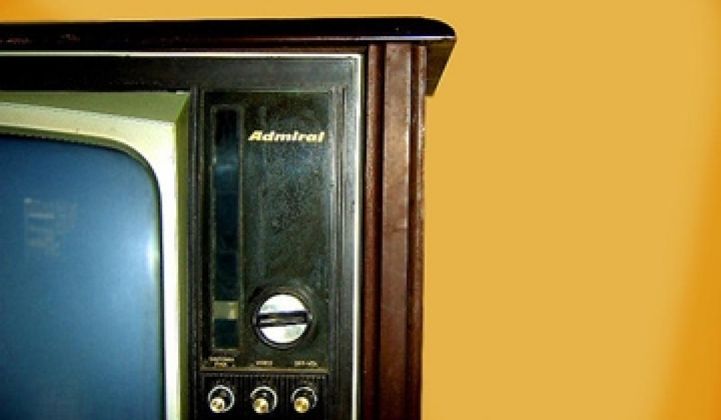
The California Energy Commission unanimously voted to adopt regulations that will force electronics manufacturers to curb the power consumed by TVs.
The big question now is whether other states will follow. California has been a leader in energy efficiency regulations and many states do follow its lead. Because of the controversy the regulations have generated, other states may take a wait-and-see policy. Nonetheless, since TV makers will already be developing sets for California standards, it would be easy for another state to piggyback along.
Voting 5–0, the CEC has imposed regulations that will require TV manufacturers to reduce the power in TVs (measuring 58 inches across or less) to consume by about 33 percent less by 2011 and by 49 percent less by 2013. Put another way, that means a 42-inch TV needs to consume only 183 watts by 2011 and 115 watts by 2013.
After ten years, the commission estimates the regulations will save enough energy to power 864,000 single-family homes.
Many TVs already meet that standard. Panasonic already makes plasma TVs, for instance, that consume 142 watts. Hitachi and others have also begun to show off technologies-like automatic shut-off and TVs with energy efficient lighting schemes-that could lead to TVs that consume less than 100 watts. In fact, 1,000 TVs already meet the standard, the Commission points out.
True, but it's the unintended consequences that scare manufacturers. Integrating a hard drive into a TV so that it can record TV shows invariably will increase power consumption. However, a TV with a built-in DVR might consume less energy than TVs and DVRs sold separately. The regulations, thus, could increase power consumption. While the Commission can anticipate some contingencies like this, it won't anticipate them all, TV makers argue. 3D TV? Going to be tough. Energy efficiency further can add to the cost of TVs."
We certainly don't want to see arbitrary regulations based on old data and math errors replicated – especially when alternatives [that are industry-supported] exist that would save as much or more energy than the CEC's regulations, without harming the economy or retailers," wrote Laura Braden, of Californians for Smart Energy, a trade group of retailers.
If you want to save energy, some have argued, talk to Cisco and Comcast and get them to start making energy efficient set-top boxes.
Given that TV energy efficiency has improved an average of 41 percent in the past two years, Wednesday's decision by the CEC represents a choice to "micromanage the design and development of future televisions," Jason Oxman, the Consumer Electronics Association senior vice president of industry affairs, said in a prepared statement Wednesday.
Costs of the new regulations are hotly debated. The CEA said that removing non-compliant televisions from California store shelves could cost the state up to $50 million in lost tax revenue and lead to about 4,600 store workers losing their jobs. But the Environmental Defense Fund said that the regulations could save state consumers $8.1 billion over ten years.
The bitter fight over the regulations also comes complete with emotions. Some energy experts have complained that the electronics industry has exaggerated the impact of any sort of regulation for years and played hardball at every turn. Californians for Smart Energy claimed that the regulations will destroy thousands of jobs and eliminate millions of tax revenues. Today's hearing was originally slated for October, but the night before the hearing, the CEA filed a 90 plus page commentary at 4:55 p.m. So that it could read it, the CEC delayed the hearing.
Electronics retailers, of course, have had to deal with a far more titanic force in recent years: internet retailers that can ship products over state lines and let consumers skip sales tax. There is one major California TV maker and it supported the legislation. Vizio, however, only keeps a token number of employees in its home state: most of the heavy lifting for the company takes place in Asia.
Energy efficiency experts note that appliance makers said the same thing back in the 1970s when energy efficiency regulations were placed on household appliances.
On the other hand, the industry stats don't lie: Power consumption has steadily declined in TVs without regulations. The industry also for its part says that the CEC has used old, outdated data.
"There is absolutely no need for this regulation. All of their arguments are based on old data," said Peter Fannon, vice president of technology, policy and government regulation from Panasonic last month.
Jeff St. John contributed to this report.
Photo via Flickr/Creative Commons.




 41
41
 15
15
 9
9