
Posted: September 4, 2007 - 9:00 am (EST) To make a real dent in global warming, a clean-energy technology has to be cost-competitive with coal - without long-term subsidies.
At least that's what Vinod Khosla argues. Founder of his eponymous Khosla Ventures and, more famously, a co-founder of Sun Microsystems, he says clean energy won't grow large enough to slow climate change if it isn't cost-effective..
It also must be capable of delivering power whenever utilities' customers want it, he says, and needs to be able to provide huge amounts of energy - enough to replace half the market, he says. "It needs to be 50 percent to be a climate-change solution, and it has to work in India and China," he says. "Without that, we're just making ourselves feel good."
How does this stack up against his own investments? The Silicon Valley venture capitalist is well-known for backing biofuels - and has also made investments in solar-photovoltaic (PV) companies, which convert sunlight into electricity. But he doesn't think those technologies can save the world. A good investment is different from a good climate-change solution, he says.
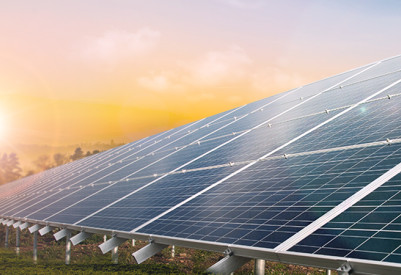
Of all the technologies he's backed, Khosla seems keenest on solar-thermal technology. It makes electricity using the sun's heat, instead of its light, and has the best chance of being cost-competive, he says. (Khosla Ventures invested in the solar-thermal startup Ausra.)
Other financiers also are once again attracted to the decades-old technology. In July, Beit Shemesh, Israel-based Solel Solar Systems announced it's building the world's largest solar park in California's Mojave Desert after San Francisco-based utility Pacific Gas and Electric Co. agreed to buy all 553 megawatts of the park's capacity. The same month, Spain's Acconia Energy closed $266 million in project financing for a 64-megawatt solar-thermal plant operating in Nevada. Projects are also underway in Spain, Morocco, Algeria and Egypt, among other places.
Why is this retro technology getting all this action? Solar-thermal is already far cheaper than PV, for one thing, and advocates believe the cost could drop drastically. According to the U.S. Department of Energy, solar-thermal projects delivered electricity for between $0.11 and $0.18 per kilowatt-hour in 2000, compared with between $0.24 and $0.30 per kilowatt-hour for PV. Of course, solar-PV competes with retail electricity prices, while solar-thermal projects would sell at wholesale prices to utilities.


