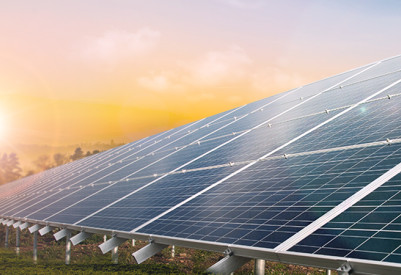



Mark my words. At the Vanity FaIr Oscar Party this year, the number one topic will be zinc. Maybe I'm getting my parties confused. But in any event, engineers in green technology are increasingly finding ways to exploit the metal with an atomic weight of 30 for energy storage. Zinc rechargeable batteries have been around for decades actually, but they degrade quickly. Technical advances are now making them practical for commercial purposes. Solar equipment maker Oerlikon earlier this month said it has come up with a new line of manufacturing equipment that lets solar companies add a layer of zinc oxide to their modules. This increases the efficiency of thin-film amorphous solar modules from 6 percent to 7 percent. Meanwhile, PowerAir, a Lawrence Livermore National Labs spin-out, has created a BlackBerry-sized device that holds a zinc solution, according to CNET. When the solution is exposed to air, electricity is produced, allowing the device to function as a generator or a battery. And earlier this year, PowerGenix showed us its rechargeable zinc-based batteries. Power tool makers already use the company's batteries. Soon, a major battery maker will sell PowerGenix's batteries under its own names as replacement for ordinary cell batteries you buy today. Cahiers du Cinema ranked this film on zinc the third best ever on the element, right behind "The Groove Tube" and that episode of "The Simpsons"  on zinc. Car and scooter makers are also looking at zinc batteries, according to PowerGenix CEO Dan Squiller. And finally, some researchers believe it can be used to store energy at solar thermal farms. Heat from the sun can be collected and concentrated on a tower filled with a zinc solution. When the concentrated heat turns zinc into zinc oxide, it effectively stores energy for later use. Unlike molten salt, the energy won't dissipate. Energy storage, of course, is the new "Google" opportunity in greentech. I'm telling you. It's the Rat Pack of soft metals.