


Another day, another request for tens of millions of dollars in Department of Energy stimulus grants.
This time around it's the California State University system, which joined a short list of non-utilities seeking a piece of DOE's $3.9 billion smart grid stimulus grant program.
CSU wants $77.5 million to support a $155 million program to test smart grid technologies across its 23 campuses, which it's calling EnergyIQ. It's enlisted demand response provider EnerNoc, DOE's Lawrence Berkeley National Laboratory and Galvin Power to help.
The idea is to install smart meters in 934 buildings and use the energy data from them to squeeze more efficiencies out of their electricity use. That could cut CSU's electricity use by 15 percent to 20 percent, which equals about 90,000 megawatt-hours per year or about $20 million.
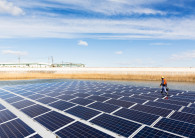
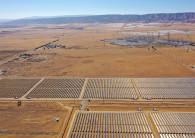
CSU also wants to link up its 14 megawatts of solar power and 30 megawatts of combined heat and power generation systems, it said. Both solar power systems and so-called CHP projects are the targets of separate DOE stimulus programs.
Utilities have by far dominated the list of entities asking DOE for smart grid grants, but CSU isn't the only non-utility seeking a piece of the pie.
Building owners trade group BOMA Chicago has asked for $93 million to build a building energy management network involving smart meters, an energy command center from demand response provider Metropolitan Energy and overall contracting from French energy services giant Schneider Electric (see BOMA Chicago's $93M Smart Grid Stimulus Pitch).
And the Mississippi state government is using $3.75 million in federal stimulus funds to install about 1,500 meters from Jackson, Miss.-based SmartSynch independent of the utilities that serve it. But Mississippi's money comes not from the smart grid grant program, but from he $40 million it is getting from the Department of Energy's $3.1 billion State Energy Program (see Mississippi Goes It Alone With Smart Meter Network).
DOE's smart grid stimulus grant program is over-subscribed, so it will be interesting to see if projects like those CSU and BOMA Chicago are proposing can win out against those from utilities that have a more direct role in managing the power they generate and distribute (see Green Light post).


