
• Saturday, November 21, 2009 Latest Update: 4:29PM
Ucilia Wang | February 23, 2009 at 7:48 PM 13 Comments

Energy Storage: a Poor Idea for Solar-Thermal Power Project


Solar-thermal power supporters often cite energy storage as a benefit the technology brings. But it may not be practical for commercial deployment. At least not now. 

Charles Ricker, senior vice president of marketing and business development at BrightSource Energy, said the company isn’t adding the energy storage component its projects because it doesn’t make financial sense.

“We have the ability to add storage, but we are not doing that in any of the projects we are doing,� said Ricker during a panel at the UC Berkeley Energy Symposium Monday. “The return on investment isn’t there.� The Oakland, Calif.-based companies have deals to supply solar power to PG&E and Southern California Edison. 

Increasing the size of the solar-thermal power plant is a better way to design a profitable project, Ricker said.

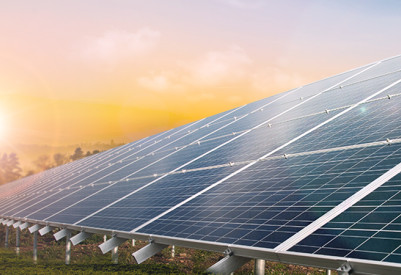
Solar-thermal power plants are meant to be large-scale projects that, partly because of their sizes, can cost lower to build and operate than projects using other types of solar technologies. Unlike a power plant using solar panels, a solar-thermal power plant requires a lot more land for the array of mirrors to concentrate the sunlight for generating steam, which is then fed to a generator to produce electricity.

During that process, the heat used for steam generation can be stored in a tank containing materials such as molten salt, which remains a liquid when heated above 430-degree Fahrenheit. The salt can be pumped to generate steam at night to run the generator. This process can keep a solar-thermal power plant operating when the sun isn’t shining, a feature that sets this type of solar power plant design apart from solar panel-based systems (attaching batteries is too expensive).

But adding the storage component doesn’t make financial sense at this time, Ricker said, because the most lucrative way to make money from solar is to supply the power when utilities need it the most. That would be in the early afternoon when it’s hot and the air conditioning is on full blast. Power producers can sell electricity at a premium during peak hours. 

“A lot of companies are talking about solar as a baseload plant,� said Ricker, referring to the idea that a power plant can meet the continuous energy demand of the market it serves. “We don’t see that.�


Comments [13]

  • Peter Antypas 02/24/09 7:37 AM

    (Oops, I hit the “post comment” button too soon: ... continued post:)

    Because one-way broadcasting of news and content is far more “cost efficient” than the Internet. You may want to rethink your idea of “cost”.

    Reply
  • StevePluvia 02/24/09 5:25 AM

    Stefano, its all about costs.  When cost effective storage is developed or available—(for example pumped hydro now), it will be used anytime it is profitable.  If you follow the various thermal storage technologies in development you would find none are there just yet. On the other hand pumped hydro works as long as you have inexpensive water, elevation gain and water storage available.

    Reply
  • Cdog 02/24/09 6:00 AM

    Stefano, Steve,

    I would argue that the the renewable companies (solar PV, solar thermal, wind) are not seriously considering storage because they don’t have to. Regulations are set so that the system operators and utilities have to take renewable energy in whatever form and whatever time it is produced - the power producers are not required to use storage to smooth it out or match demand. This is different from conventional power sources, which have specific capacity requirements.

    These regulations were put in place to encourage more renewable development, and everyone else (ultimately us, the ratepayers) bears the cost of the intermittency of these sources. Ultimately, this will likely have to change to get to very high levels of renewable penetration.

    Just my $.02

    Reply
  • Stefano B, Italy 02/24/09 10:23 PM

    Steve and , thanks for you reply

    @ Steve

    I think that you are right, it’s all about costs.
    Anyway, while BrightSource mya have not found yet a cost effective solutions, other companies are already building plants with thermal storage. Take Abengoa, for instance.

    @ Cdog

    About regulations: the situation it’s not exactly like you describe, at least in Europe.
    As a renewable energy producer you have the right to have your energy retired by the grid operatoer, but you are not compelled to.
    You may have a more active sales policy and try to sell electricity at higher prices, thus increasing your margins.
    And, like Steve says, “peak power production is much more valuable than nighttime power from say wind”.

    Reply
  • Stefano B, Italy 02/24/09 3:09 AM

    This sounds to me quite strange, from all I’ve been recently reading about this topic.

    Most of the documents I’ve been reading state that thermal storage may be the single most important innovation that can lead CSP to become competitive.

    For, instance, DLR claims (http://ec.europa.eu/energy/res/events/doc/tamme_dlr_storage.pdf, ex fig. p. 5) that using thermal storage may lower the levelized cost of energy produced by the plant.

    I think It’s a matter of capex, mainly: It may be that Bright Source hasn’t yet found a solution cheap enough to reach a financial sense.

    It would be interesting to listen to some qualified opinions.

    Reply
  • StevePluvia 02/24/09 6:07 AM

    Cdog, actually many states offer much higher rates to buy baseload renewable power, and time of day significantly effects price they pay; peak power production is much more valuable than nighttime power from say wind.

    Reply
  • Peter Antypas 02/24/09 6:44 AM

    In my mind, storage only makes sense at the building level, not at utility scale. Imagine every building in the grid having a storage system. The grid would only have to sustain average load. No peaks. But utilities hate this idea because it is disruptive to their business model. They want everyone to depend on them.

    Reply
  • StevePluvia 02/24/09 7:01 AM

    Peter, no disrespect, but your proposition is ridiculous from a cost perspective not to mention, a little tin-foil-hat paranoid; storage cost are WAY too high, added construction costs required to meet fire codes and added maintenance costs make your proposition “cost-impossible” during the foreseeable future.

    Reply
  • Peter Antypas 02/24/09 7:32 AM

    My proposition is ridiculous?

    Did you notice that a month ago we had a major ice storm that left a million or more people without power for two weeks? What’s so “tin-foil-hat” about that?

    By your logic, we should never had invented the Internet and we should still be getting our brains programmed by the same big 5 media companies.

    Reply
  • Peter Antypas 02/24/09 8:02 AM

    Scott,

    Batteries are really expensive *now*. Don’t forget the time element wink

    Reply
  • Frank Wylie 02/24/09 9:26 AM

    If we just mandated utilities to purchase excess kilowatts produced by homeowners, and small producers, as apposed to net metering, it would go a long way to spur all forms of realtively small ” green ” generation, nation wide.  Running your electric clothes dryer at night ( off peak) should cost less to consumers, but without time-of- use metering their is no insentive to do so.
    This simple change in our energy consumption would save more money than all the solar, wind, and Hydro combined.  It would also be much much cheaper.  The old saying that a kilowatt saved is the cheapest kilowat surely applies.

    Reply
  • kery bradshaw 02/24/09 7:39 AM

    Storage from solar plants is limited to a dozen hours or so, enough to make quite a difference in
    the price it can command. However, if California has followed its normal practice of screwing things up, they probably require the same price to be paid for green electricity regardless of whether it’s worth anything. Most green electricty has little value - those windmills, solar PVs, etc. are useless for meeting peak demand and thus of no value when power demands increase , which will happen every year for the next few decades. Build a million windmills and you’ll still need to build reliable power generators next year.  Even with storage, there are many days when the sun doesn’t shine enough so there will be no juice, regardless of storage capacity.
    Green energy is , except for hydroelectric and some solar thermal, dumb energy. It has no place in an advanced civilization. Nuclear power is the only way to go. Even Obama understands that. And he hasn’t the ability to understand anything.

    Reply
  • scott 02/24/09 7:45 AM

    He is not saying its a bad idea because it would not be helpful, only that noone is going to pay for it. Batteries are really expensive.

    Also storage is still useful for peaking plants as the peak hours are offset from the sun by about 2-3 hours.  People in Arizona still use AC in the summer when the sun goes down.  Same in Southern CA.  The time of day pricing in CA extends past sundown as I recall.  That being said it all depends on how much it costs if it is useful for a peaker plant.

    Reply

Green Light

Greentech Media's Green Light blog covers the full-scope of the greentech world, while expanding the range of our daily news reporting with brief and insightful blog posts from our Greentech Media editors, GTM Research analysts and numerous guest bloggers.

.