

Midday events at Stanford University attract a crowd of students, professors, George Schultz in a red jacket and a bunch of retirees. I mean, who else can attend a speech by the CEO of ExxonMobil in the middle of the day?
Rex Tillerson, chairman and CEO of ExxonMobil recited a speech on Tuesday afternoon in an event sponsored by the Global Climate and Energy Project (GCEP). GCEP's purpose is to conduct pre-commercial research that will lead to technologies that reduce greenhouse gas emissions. ExxonMobil is GCEP's largest sponsor and plans to invest up to $100 million in the program over 10 years.
In 1968, there would be have been howls of protest in the face of an oil company underwriting an environmental program. These days, Stanford students just hope for employment after their studies.
Mr. Tillerson, a civil engineer by training, joined Exxon in 1975. He became CEO and Chairman of Exxon in 2006. According to Wikipedia, The Rockefeller family sponsored a non-binding resolution to separate the CEO and chairman positions that Tillerson holds in order to maintain a system of checks and balances. The Rockefeller family also wanted Exxon Mobil to invest more in alternative energy. The resolution did not obtain the necessary majority, and Tillerson held on to both job titles. According to Forbes' CEO compensation data, he made about $6.86 million in compensation in 2007.
Here are some quotes from Mr. Tillerson:
"The world economy will recover and when the world economy recovers -- so will energy demand."
"'Hydrocarbon energy is available and abundant and will account for the majority of the world's energy demand at least until 2030"
"No single energy source will meet all needs or reduce emissions, there is no one perfect solution on the shelf or on the drawing board."
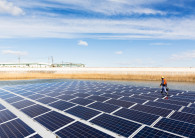
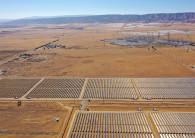
"Solar needs to drop an order of magnitude to about $0.30/W from $3.00/W."
"With much further R&D, algae could play a role in transportation fuel supplies and reducing GHGs."
"We believe that a carbon tax would be a more effective policy than a cap-and-trade system."
"It is rare that a business person like myself would support a new tax but it is my judgment that a carbon tax would be the best solution."
"We need a 30-year energy policy, 10 years won't do it."
On peak oil:
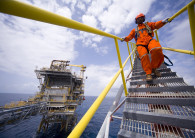
"We endorse the assessment of the USGS -- the current conventional oil resource base is three trillion barrels and there are another one to two trillion barrels in heavy oil and one trillion barrels of shale oil. We have consumed one trillion barrels since we started using oil. There is a large endowment out there. USGS updates have always gone up -- it is a technology phenomenon. With technology advancements like 3D seismic imaging to a whole host of other technologies. We have gone from 600 feet to 10,000 feet ocean drilling. It's ongoing technical advances that open up and identify that resource endowment -- imaging in sub salt basins in West Africa and below basalt imaging. The technology keeps moving and the resource base keeps growing, We are confident that we can access much more. We have sufficient hydrocarbon resources to meet the world's needs for the next century."
On climate change:
"Climate science is one of the most complex sciences out there today. We don't believe in scientific consensus. That's an oxymoronic statement. We support scientific investigation. We have to submit to the continuation of scientific study. Its too important to fail. C02 concentration is going up and temperature is going up but what is the relationship? We have an issue about how people use the models. First and foremost we need to support good unencumbered scientific investigation. As far as policy -- it is a risk management issue -- probabilities of outcome. We need to actively manage that risk. Our position hasn't changed. The science has been so contaminated by the political process."
"The U.S. has a rich resource endowment that has not been fully explored or tapped. It is withheld from our beneficial use -- our government water and our government lands. We've been set in the mindset of the 1960s It is purely and simply an environmental issue. If you live by the precautionatry principle -- get out your tent and your matches and your horse. We have to help the public understand."
We can't drill our way to energy independence. The Energy Information Administration (EIA) has reported that offshore drilling will have little effect on oil and gas production or on prices before 2030. Meanwhile, Big Oil swims in record profits and the U.S. is the top global warming polluter in the world.
We need a new vision for our future. We should focus on reducing our need for oil -- which is where real national energy security lies.
Greentech Media's Green Light blog covers the full-scope of the greentech world, while expanding the range of our daily news reporting with brief and insightful blog posts from our Greentech Media editors, GTM Research analysts and numerous guest bloggers.
contact rob at .(JavaScript must be enabled to view this email address)