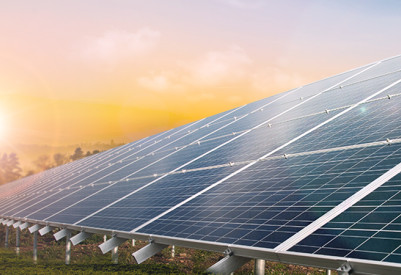


First, television makers are actually already competing intensely to reduce the power consumption on their sets. In October, the big Japanese manufacturers -- Panasonic, Sharp, Sony, Toshiba, etc. -- showed off a number of energy efficient TVs at Ceatec, the Japanese version of CES. Sharp, for instance, has a 65-inch LCD TV that uses about 26 percent less power than an earlier, smaller model. Granted, the size of the TV means that it probably consumes a lot more power than your TV, Sharp among others also has smaller TVs that use less power. It also showed off an experimental 26-inch LCD that consumes only 40 watts, or less than many light bulbs. (The image shows a solar-powered TV that Sharp showed off at Ceatec.)
A number of these TVs will go on display for Americans at CES later this week.
Second, roughly 87 percent of the TVs on the market today will already meet the standards that the CEC is contemplating, said Art Rosenfeld of the CEC, according to the L.A. Times. More stringent ones will be released two years later.
Third, history shows these regulations work. Rosenfeld, a physicist by training, championed efficiency regulations for appliances back in the '70s. Appliance makers vigorously opposed him. The regulations passed nonetheless. The result? Appliances like dryers use about 60 percent less power now than they did then, they perform better (today's fridges have far more room) and they cost about the same in real dollars.
In some cases it only took minor changes. Have you noticed that the top of your new dryer isn't nearly as warm as the old one or the one you had as a kid? That's because they insulate them far more efficiently now. For his work, Rosenfeld has been hailed as national hero in energy circles and even by appliance execs.
Fourth, this will save money. The CEC estimates that consumers will save $18 to nearly $30 a year in their power bills.
‹ Older | California to Pass Energy Efficient Rules on TVs—But Don’t Worry
California to Pass Energy Efficient Rules on TVs—But Don’t Worry | Newer ›