Rolling up startups is hard to do correctly. It's easy to say that two companies would work better as a combined entity, but in reality it's quite difficult to do regardless of the scale of the companies involved -- you have cultural shifts to make, personnel who will need to change roles and perhaps leave, a combined set of investors to fit into the same size boardroom, significant operational disruption, not to mention the difficulties involved in pricing and structuring the deal, etc.
So it's not something to be bandied about loosely. But nevertheless, I think it's time for more cleantech startups to be thinking about how they can team up and carry forward as combined efforts.
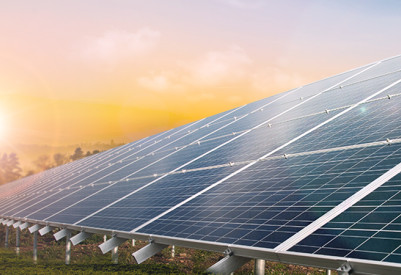
First of all, there are just way too many "components" out there. I use that term in a very general sense. What I mean is that there are a lot of independently run efforts out there that are trying to build entire standalone businesses on the basis of one innovation within a larger product or service effort. We've all seen them. They are the tweak that makes an improvement in solar panel efficiency. Or the widget that helps connect various pieces of residential equipment. Or an improvement to a particular part of a biofuel production process. On the one hand it's great to see all of this emerging innovation that will eventually be part of a more compelling overall offering in these categories -- it is the aggregation of such improved components that will eventually unlock the breakthrough customer value proposition that will take these sectors to the next level of market adoption.
But it's time for such aggregation to start happening.
Secondly, it's just increasingly hard out there for companies who are out fundraising. I know the deal tracking data from the Cleantech Group et al suggests that deal counts and dollar amounts of cleantech VC are back to where they were in the 2007-2008 timeframe. But take it from me, it's really hard out there. I am seeing so many companies out raising money right now, and many of the deals that are taking place are being done largely as insider rounds. Certainly down rounds remain the norm. And in addition, it's impressive and scary how many VCs themselves are out fundraising or gearing up to be fundraising. This is a bad leading indicator for startups. So many funds are probably tapped out for their current funds, and then will clearly have trouble raising their new fund, that additional capital won't be there for a while. So startups are already having to work hard to raise new capital, and it's just going to get worse.
Nevertheless, there definitely is still capital available for really compelling stories. And as an overall observation, the more comprehensive the story, the more compelling it is to investors. If you are providing a complete solution to customers, with a strong economic value proposition, driven by multiple innovations across the full tech/product/service offering, and owning as much of their spend in that category as possible, that's much more compelling than being a tweak or a component level innovation.
Thirdly, top notch management remains the single most limited resource in the cleantech sector. There are lots of good management teams out there with emerging experience and/or pieces of the complete skillset that will be required in order to make a startup a rousing success. There are, however, very few GREAT management teams with the complete skillset already in place. This is really tricky, but generally speaking the more you can combine and optimize these teams by bringing them together under the same roof, the better chance you have to aggregate a great management team out of a set of good managers.
Like I said at the top, rolling up startups is not to be taken lightly. It's really tough to do, and has a high rate of failure. It will likely require specialized expertise and assistance. But it's time for a wave of it to take place, because of the economic times we're in, and because cleantech markets are in need of more comprehensive solutions. Cleantech startups, and their backers, need to be increasingly looking for such opportunities.
There's been an uptick in M&A activity in cleantech, according to the latest figures. This likely represents opportunistic purchases for the most part by larger incumbent players. Startups need to begin playing the same game, or they'll be left behind.


