
After attending the Clean Economy Summit a couple of weeks ago, things have been a bit of a blur, so I'm only now able to write about one major takeaway I had from the event.

There's an emerging love affair between the cleantech sector and the U.S. military.

At the event, two of the best-attended sessions were a speech by the Secretary of the Navy Ray Mabus and a special panel session on the military and energy technology innovation.  And for good reason -- while the legislative branch of the U.S. government continues to dither away the opportunity to establish robust cleantech markets in the U.S., the military can't afford to wait.  And so they're providing a pathway to commercialization for emerging clean energy technologies, which is exactly what many cleantech startups desperately need right now.

The Navy, Air Force and Army have always provided strong support for technology innovation in the U.S. The long-standing DARPA program has helped launch any number of technology innovations that later became important to the private sector (the most often cited example being, of course, the internet) by supporting early research and 'productization.' That way, successfully commercialized technologies can rack up early (and lucrative) sales to the U.S. military, because of the services' prioritization of mission success over cost savings.

I recently sat in on a small private talk featuring John Trbovich of Arsenal Venture Partners, which has very tight relationships with the military.  He made a compelling case that the Department of Defense's energy challenges are actually a strategic opportunity.  According to my (perhaps faulty) notes from John's talk:

  • The DoD has 93 billion square feet of facility space, spread out over 545,000 buildings.
  • The DoD is the world's largest oil buyer. They spend $16B annually on fuel.
  • The military directs $81B per year to R&D, which represents 22% of the overall R&D spending in the U.S.
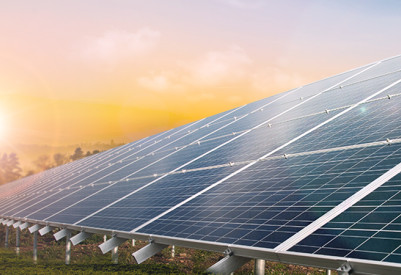
  • The Air Force has become one of the most important "buyers" of solar power, but primarily by leasing their land and engaging in power purchase agreements.
  • The Navy has laid out very aggressive goals for reducing fuel use and carbon intensity across both sea and land operations.

I've also been invited into small sessions where Navy tech people have gotten together with cleantech VCs, as just one example of a case where the military leadership is directly reaching out to the cleantech entrepreneurial community for ideas and solutions.

All of which helps explain why the cleantech industry regards the military as such an intriguing potential partner -- deep pockets and compelling needs.  And I see this in some of my portfolio companies, particularly those who've engaged with various military efforts as potential early-adopter customers and research funders.

But as Trbovich pointed out, this is a lot easier said than done.  

  • The DoD has no consistent technology acquisition policy or vehicle.
  • Despite these strong directives from the top, actual purchasers are often given no budget authority for new tech.
  • Decision-making is often highly decentralized.  For example, in energy efficiency and onshore renewable power, it's often a base-by-base decision -- which isn't very scalable.
  • The DoD can hinder itself.  For example, the DoD has put a moratorium on new wind installations because of antiquated radar systems that are still in place.
  • There's often a timeframe mismatch.  Solar PPAs are generally at least 20 years to make the economics work, but the max lease allowed for any base is 10 years.
  • Base commanders may have the desire, but often don't have control over capex.  They are stuck with high operating expenses because they don't have the capital budget to do anything about it.
  • It's easy to waste significant time chasing DARPA dollars and sales contracts where the process isn't as open as it may appear -- and where another vendor is already essentially baked in.

The ability to help navigate some of these challenges is exactly why my firm is an LP in Arsenal VP's fund. It's just a lot easier said than done, and those guys understand how to do it.

Secretary Mabus' speech at the Clean Economy Summit brought the conference crowd to its feet in applause. He spoke not only of the above needs, but also talked poignantly about how U.S. men and women in uniform are dying because of the need to transport massive amounts of fuel and batteries into war zones. He also described the frustration of military leadership when they see energy-related dollars ending up in the very regions where the military is engaged in conflict.

And so part of the reason for this love-fest is even more basic: it's the most visible way that those of us in the U.S. cleantech industry feel we're working not only for our own sake and for environmental goals, but also to support our country.  

If only such sentiments were more widely felt and understood on Capitol Hill, we'd see a lot fewer partisan political games around energy policy.