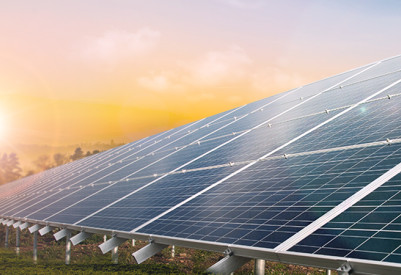

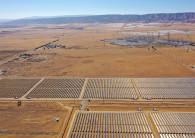
Posted: September 6, 2007 - 2:00 pm (EST) "Very large-scale" solar-electric projects in the desert could help fill the world's demand for energy and bring drinkable water to the driest regions at the same time, said Peter van der Vleuten, a member of an International Energy Agency task force, today at the European Photovoltaic Solar Energy Conference.
His presentation was part of a report by the IEA Photovoltaic Power Systems Programme's task force on so-called Very Large Scale Photovoltaic Power Generation Systems, which are projects that span a range of megawatts to gigawatts in size.
These gigantic projects make sense because "the desert regions receive more solar energy in six hours than the world uses in a year," van der Vleuten said. Also, most desert regions are surrounded by salt water and are facing serious water crises, he said.
How serious? Some 1.2 billion people - 20 percent the world's population - have no access to clean potable water, leading to 12 million deaths every year, and these numbers will grow even more dire, he said.
Desert regions could become energy-independent, export power internationally, boosting their economies, and also have enough left over to support desalination.
Some 80 to 90 percent of the cost of desalination, which would make salt water drinkable, is energy, he said.
"It is a basic right that all societies and human beings should have fair access to energy markets, bearing in mind that energy production and consumption must be sustainable for future generations," van der Vleuten said, quoting the address by Prince El Hassan bin Talal of Jordan at last year's World Energy Dialogue.
All very well, but many in the industry today believe that photovoltaic solar panels are far too expensive to make sense in these large-scale projects, and think that concentrating solar-thermal power, which uses the sun's heat rather than its light to deliver electricity, makes more sense in utility-scale applications.
"PV is not a climate-change solution," said Khosla Ventures Founder Vinod Khosla, who has invested both in photovoltaics and in solar-thermal startups. "It's too expensive."
