

[pagebreak:Sixteen Ancient Technologies Reborn]
Not everything is new in greentech. A number of companies are based around technologies and concepts coined years and even centuries ago. They failed or became obsolete for a variety of reasons: cost, better alternatives, a lack of interest, inconvenience. Some are also modernizing the underlying concept.
Will they work now? Who knows, but you've got to agree: The list is surprisingly long.
1. Mashed Earth: Native Americans in the Mississippi area, among others, built burial mounds and walls with compressed earth. The building technique pretty much went out of favor as soon as someone figured out how to apply heat to fire adobe or brick. But now, Integrity Block is bringing it back. The company has found a way to build construction-grade blocks out of dirt. The process consumes less energy than making them out of concrete. Added bonus: the blocks actually cost less than existing cement bricks, says Jim Petit at Navitas Capital, which has invested in the company.
2. Solar-Thermal Water Heaters: Back in the 1920s, residents of Miami, Berkeley, Los Angeles and a host of other sunbelt cities relied on solar hot water heaters. Then the gas companies came in and they went away. Conspiracy theorists like to point to this as an example of corporate evildoing, but reality is much simpler. Gas was cheap and people liked having hot water on rainy days too. With the gas and electric infrastructure in place, solar heaters can now be used to supplement existing water heaters. It's a growing industry in China. The collectors are also more attractive than in the old days, when they'd put a tank on your roof. Mondial Energy in Toronto is one of the big proponents.
3. Solar Lighting: Solar lighting is earth's favorite light source since the Big Bang. Sunlight Direct has a system (which evolved from a Sandi a project) that collects sunlight in a rooftop dish and the pipes it through a building with fiber optic cables. UC Davis has something much simpler: it is tinkering with controllers that will dim and brighten electric lights with the availability of sunlight.
4. The Opposed Piston/Opposed Cylinder Engine: Achates Power and EcoMotors are working on car engines that contain a double-length cylinder with a piston at each end. (There are no cylinder heads in between.) A single-engine module consists of four pistons and two cylinders. The pistons and cylinders are horizontal too, so car and engine manufacturers can stack them. The unusual configuration results in several advantages. Mileage can be boosted by 40 percent to 50 percent, when a two-module engine is compared with a standard diesel. The engine also can be made 30 percent lighter. Because the engine modules are horizontal, cars can be more aerodynamic.
We can all be glad it didn't work the first time around. Junkers & Co. (see photo two above), which designed planes in Germany in the '30s, had an opposed cylinder/opposed piston design on some engines from 1934 through 1939. The concept never fully took off, however, because it wasn't easy to mass manufacture.
5. Swirly Water: Another greentech opportunity missed by the Third Reich. An Austrian forestry expert named Viktor Schauberger championed ideas about natural water flow in the first few decades of the 20th century. The main one was that you could purify water by swirling it through a vortex. Schauberger got the idea from watching fish, and he concocted devices called the Trout Turbine and the Vortex Generator. Hitler met with Schauberger, but his scientific handlers pooh-poohed him. Schauberger was ultimately derided as a kook. That's him and one of his diagrams.
Watreco, a startup in Malmo, Sweden, has devised purifiers based around a vortex. Parc has one too. Vortex Hydro Energy in Michigan is trying something similar, but using water vortexes for energy.
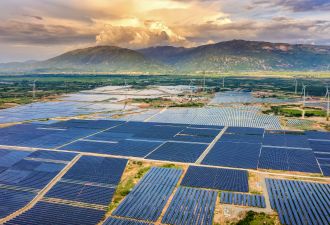
6. Dung: Technically, It's never gone out of style, but dung's popularity as a fuel source tends to ebb once a nation gets past the subsistence level. Microgy, a division of Environmental Power, is erecting thermophilic digesters that decompose manure and extract the methane, which then gets shipped down a pipeline (see photo three above). BioEnergy Solutions has a trial going with PG&E. Image one above displays some of the equipment – digesters, dung separators, for accomplishing the task. Call it deconstructed dung.
7. Ambient Cooling: Again, never out of style, but clearly phased out in favor of mechanical HVAC systems. Modular homebuilders are incorporating ambient whenever possible, like systems from Michelle Kaufman Designs. If you want to know why some of modern eco homes seem to have a vague Asian sensibility about them, it's probably because temples and official buildings medieval China and Japan took full advantage of ambient air. Datacenter builders are also trying to take advantage of chilly outside air –Microsoft's Irish data center takes advantage of ambient air.
[pagebreak:Ancient Technologies: Continued]
8. Electric Cars: Another favorite of conspiracy nuts. Detroit killed the electric car in the 1990s, the theory goes, because the auto industry was afraid consumers would flock to overpriced, inefficient cars that would regularly need battery replacement. The bastards. They’re probably inside Tesla Motors and Think conducting sabotage: That’s the real reason that company is having problems.
But electric cars, and their death, go waaay back. Detroit Electric made all electric cars from 1907 to 1939. In 1917, an all-electric Detroit might cost you anywhere from $1,775 to $2,375. It could go 60 to 100 miles on a charge and get all the way up to 25 miles an hour. "No other bridal present means so much, expresses so perfectly what you mean to say," one ad read. Huzzah! Plummeting gas prices, however, made gas cars more popular. Then the 1929 stock market crash killed it. Hmmm. Declining gas prices and stock market problems. Uh-oh.
9. Biodiesel: What was the first fuel used by Rudolf Diesel? Peanut oil. Fast-forward several decades. Now you can fill up on the sludge in the dumpster behind Carl’s Jr.
10. Hemp: This one’s a tribute to all my stoner acquaintances in high school that yammered on about how George Washington grew hemp. That was right before they tried to explain the artwork on "Eat a Peach" by the Allman Brothers. The fast growing weed is a natural for eco-clothing. Still trying to confirm that "Wizard of Oz"/ "Dark Side of the Moon" thing though. I know it definitely doesn’t work with "It’s a Mad Mad Mad Mad World."
11. Zinc Batteries: Thomas Edison, the prolific American inventor, tried to make rechargeable batteries out of zinc oxide. The formula, however, was never quite right. The batteries would die after a few charges. Now, companies like PowerGenix, ZPower andPowerAir have tinkered with the chemical formula to give zinc batteries a longer life. And, unlike lithium-ion batteries, they won’t randomly explode.
12. Plasma Lights: Another Edison connection here. Edison favored lights with a filament. Nikolai Tesla, noted eccentric genius who is belatedly proven right, favored heating up gases in a bulb to create and plasma and hence light. Edison won, and that’s why we have inefficient filament bulbs everywhere. Luxim and Eden Park, however, have come up with lights following the Tesla model. Luxim’s bulbs are in TVs and will soon be sold for outdoor lighting. It looks like a Tic Tac. Eden Park will soon release some lights that look like small flat TVs.
13. Tidal Power: Tidal power prototypes have been planted in New York, and many will go into the water off the coast of the U.K. and Ireland over the next few years. But one of the first tidal plants dates back 900 years. The Eling Tide Mill is still active.
14. Thin Clients. Not as old, but still mounting a comeback. Wyse and others have promoted thin clients as a cheap, more manageable alternative to the desktop for years. It didn’t sweep the nation and most corporate workers still have PCs. The thin-client mantra, however, is finally sinking in with the rise in power costs. NComputing, only a few years old, has already installed over one million of its sub-$100 desktops. Wyse is also seeing an increase in sales.
15. Geothermal Cooling: In the 1830s, Lord Kelvin began to record ground temperatures. He discovered that a few feet below the surface they remain relatively constant throughout the year. Then in the 1940s, Robert Webber tinkered with the concept and came up with the first geothermal heat pumps. Throughout most of the U.S., the temperature of the ground about five feet below the surface remains roughly constant throughout the year: 45 degrees to 50 degrees Fahrenheit in the northern parts of the country and 50 degrees to 70 degrees in the south. Pipes that bring that air in during the summer provide cooling (as well as heating in the winter).
Although geo cooling has been growing in popularity, it’s still not as popular as evaporative cooling, first engineered by the Egyptians.
16. Tribal Warfare, Malaria, Limited Life Spans: Again. Never out of style, but definitely on the comeback. The food riots earlier this year are likely only the beginning over a competition over resources. Disease will also spread with the onset of global warming.
But more people are growing their own produce too and trying to get the rest of their food in a 100-mile radius, so it’s not a complete downer.




 41
41
 15
15
 9
9