Ausra Gets Bought By Areva

The three-way bidding war is over.

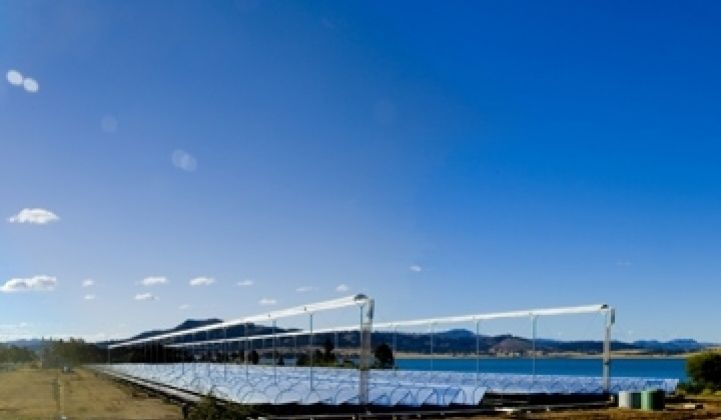
Areva, the swarming energy conglomerate, has won the bidding war and purchased Ausra, the solar thermal specialist.

Two other conglomerates had been bidding on the company, according to sources. One of them, however, was likely not Siemens. Siemens bought rival Solel for $418 million last year.

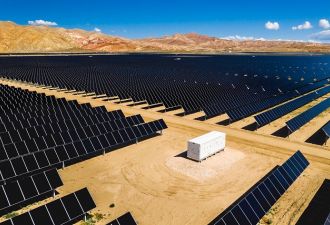
Like many Silicon Valley-funded startups, Ausra came up with a novel idea for harnessing clean power, but has lacked the money, engineering and contracts to fully test it out or take it commercial. The company, which raised over $115 million from firms such as Kleiner Perkins, wanted to replace the expensive parabolic mirrors at solar thermal power plants with cheaper flat mirrors. At one point, the company theorized -- as a way to illustrate the power of solar thermal technology -- that it could conceivably harvest all of the electrical power the U.S. would need from a hypothetical plot of desert real estate measuring 92 miles by 92 miles.

Unfortunately, it never got a chance to start testing that idea out on a large scale. PG&E, Southern California Edison and the other big California utilities awarded their largest solar thermal projects to competitors such as BrightSource Energy and Stirling Energy Systems. Speculation -– never substantiated -– circulated in the solar industry that Ausra's equipment could not provide the same level of power as that offered by other competitors.

In February of 2009, the company shifted directions. It largely abandoned its earlier plans to build and operate solar thermal power plants. Instead, it would sell equipment to large companies would would operate the power plants. PG&E actually earlier gave Ausra a contract to build a 177-megawatt plant and Ausra talked about it as a long term goal, even after it shifted its business plan to concentrate on industrial steam equipment. But last November, Ausra sold the land to the project to a developer of solar panels.

Power plants "are way beyond" the capabilities of a start-up, said CEO Bob Fishman.

Fishman's words in early 2009 proved prophetic: conglomerates are coming into the market as the start-ups try to navigate the financial and logistical issues of the market. Rival eSolar, which has a similar system, backed away from its plans to build power plants. The company now licenses its technology. ESolar still talks about building power plants, but its main activities now are wrapped around getting Indian and Chinese conglomerates the tools to build their own solar thermal power plants. 

Meanwhile, BrightSource Energy, arguably the most successful solar thermal start-up so far, had to sell part of its big power plant in California to Bechtel, which will help build it.

Conglomerate-itis. It's catching.

Areva, by the way, knows quite a bit about financing and planning large projects. It's the world's biggest nuclear company.
11 Comments

  • bill 02/8/10 6:42 PM

    Well, its good to know that the technology which had its origins in Australia is moving.  Typical of the complete and utter disregard for solar technologies on any scale that is meanigful, the present Australian government relentless pursues coal. Maybe not surprising when six months ago, the Queensland coal industry could say that coal exports from Queensland rose 4.7 per cent in the last fiscal year to a record 159.1 million tonnes.

    Reply
  • SolarGuy 02/8/10 7:13 PM

    How is Brightsource arguably the most successful solar thermal start-up so far? They have not generated a single watt-hour of electricity yet and have only generated limited amounts of thermal energy beyond all the hot air in their unreasonably priced PPA announcements. Such PPAs are unlikely to lead to projects that will actually get financed and built.  If that’s the most successful solar thermal start-up so far then I cry for CSP but my tears are from laughter.

    Reply
      • Michael Kanellos 02/9/10 4:44 PM

        They have won contracts to build large power plants. That’s better than most.

  • Casey Verdant 02/8/10 9:59 PM

    Nuclear and solar merge! Great investment by Areva in Ausra. The French nuclear company has the capital and clout to expand Ausra’s solar-thermal systems around the world.

    Researching how to make your company, product, or next project more Green? Go to http://www.greencollareconomy.com for sustainability white papers and the largest b2b green directory on the web.

    Reply
  • Bill Woods 02/9/10 1:26 PM

    “In February of this year, the company shifted directions.”

    I think you mean February of *last* year.

    Reply
  • bk 02/9/10 1:43 PM

    how does eSOlar have a similar system to Ausra? one is tower and one is compact linear fresnel! How does BrightSource getting equity investment from Bechtel in exchange for the EPC contract mean they ‘had to’? What was the unsubstantiated speculation about Ausra? It’s known that the CLF tech is lower temp and less efficiency than any other CSP! This article was not up to GTM’s usual standards.

    Reply
      • SolarGuy 02/9/10 3:12 PM

        eSolar and all tower systems are in fact Fresnel systems too.  All those individual heliostats collectively make a Fresnel parabola…  Both the Ausra and eSolar systems have multiple, elevated receivers as well. Optically, the Ausra and eSolar systems actually have very similar efficiencies.  Thermally, eSolar is the worse because of their odd ball 60 bara / 440C steam conditions.  The high temperature is nice but the low pressure means their gross cycle efficiency is ~ 34%.  Trough plants with 100 bara / 370C have gross cycle efficiency of 37% or better with bigger turbines. 

        CLFR tech is not inherently lower temperature. It started that way but it has evolved SPG and Novatech Biosol are talking about 450C temperatures and Ausra appears to offer steam at up to 750F / 400C according to this data sheet I found via google search on “Ausra steam temperature”:

        http://www.ausra.com/pdfs/SolarSteamGenerators.pdf

        if Ausra really can produce 400C steam its efficiency would in fact be better that eSolar’s and close to or better than trough.  In any case, they and the other CLFR providers all appear to be heading towards higher steam temperatures so I don’t think you can discount them as you did.  That said, it still looks like PV FTW…

      • Michael Kanellos 02/9/10 4:48 PM

        similar in that both are thermal, and not PV.

  • Bo Varga 02/9/10 4:18 PM

    Wondering if it makes sense for Areva to use waste heat from nuclear power plants to feed into Ausra system, that is can Ausra harvest sunlight to leverage already hot water to achieve higher operating efficiencies.  Seems like SolarGuy is technical enough to answer this question.

    Reply
  • scott 02/9/10 5:27 PM

    All power plants have waste heat, including solar thermal.  All require cooling towers to get the feedwater temperature down before the next cycle. its a very odd, and non-intuitive reality. if you could feed the waste heat into another system, they you can feed it into the nuclear system. The components are basically all the same, on the fuel and fuel delivery systems are different.

    Reply
Need an avatar? Get one here: Gravatar
.