OPower Making Millions in Home Energy Efficiency

“Web portals and in-home displays are not delivering value”: an update on the energy-efficiency startup that could.

OPower Making Millions in Home Energy Efficiency

Green fervor, for both types of green -- cash and environment -- has spawned a crowd of smart grid and energy efficiency startups: some viable and successful, many undifferentiated, most doomed.

With more than $30 million in revenue, OPower easily falls into the viable category.  The startup, funded by New Enterprise Associates and MHS Capital, has created a new type of energy business with growing momentum.

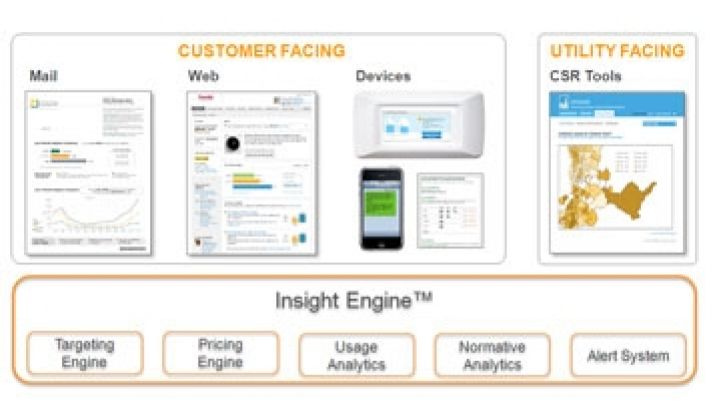
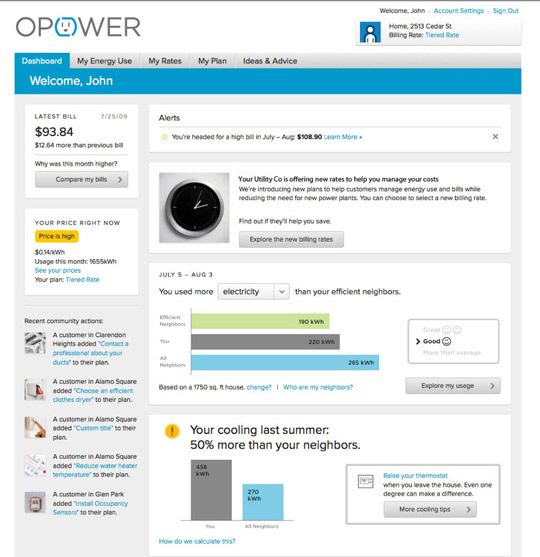
OPower is an energy efficiency company focused on customer engagement and behavior modification, currently providing millions of homes with in-home energy data and efficiency advice via paper reports or online.  The platform is described as advanced customer engagement and the firm says that about 85 percent of its customers will cut power consumption by around 3.5 percent. The customized data lets people know how much energy they're using in comparison to their neighbors and then follows it up with a recommended course of action.  

"One fundamental observation about OPower," said Ogi Kavazovic, the firm's Senior Director of Marketing and Strategy, is that the firm is "an energy-efficiency company as opposed to a smart grid company."  He added, "The smart grid is wonderful, but it's important to remember that the ultimate goal is energy efficiency. Once the smart grid update is done, that will become the new normal, but energy efficiency will continue to be the goal."

At a recent VLAB event at Stanford University, OPower's CEO, Dan Yates, said that the company's revenue was on track for more than $30 million this year.  He summed up OPower's business in this manner: "We provide information services to consumers through utility partners." He also said, "Energy efficiency is super boring.  No one cares about it," and continued: "You have to push the info, no one is going to pull it. You have to deliver outcomes, not just deliver raw data."  And in his words, that means that "web portals and in-home displays are not delivering value."

"We have cracked the nut in motivating consumers," said Yates. The rapidly growing startup works with utilities to "suck in their meter and billing data" and match that info with demographics, GIS data and weather data.  Without having any devices in the home, OPower can disaggregate the data, parsing, say, heating from cooling, and provide analysis and actionable recommendations to the consumer to lower their energy usage.

And here's a great statistic from the company: the firm is providing the equivalent of one-third of the U.S. solar industry's output in energy savings -- simply by sending out an actionable set of data once a month to utility customers.

The number of utilities working with OPower is now 37 and Kavazovic sees that accelerating over the next 18 months.  According to Kavazovic, "We're closing deals with two utilities a month."  Greentech Media's Katherine Tweed reported on OPower's contract with AEP Ohio here.

"There's so much dust in the air," according to Kavazovic, as the grid undergoes "the biggest infrastructure upgrade. But there's an even bigger story behind that dust." 

According to Kavazovic, the energy efficiency mandates in this country are becoming more aggressive.  There's more and more talk about devising a set of national standards.  "It remains a $10 billion industry -- and it's not a one-time thing, but rather, an ongoing project."

Starting this year, OPower is guaranteeing the level of energy savings it can provide to customers. According to Kavazovic, "We'll deliver 300 gigawatt-hours at less than 5 cents per kilowatt-hour." That kind of number is applicable to a large utility.

Kavazovic sees OPower as the de facto front end of the smart grid, able to provide millions in savings for end customers and a clear value proposition for the consumer, something that's been a bit hard to define, despite all the smart-grid hype.    

Ogi sums it up this way: "In a nutshell, what we've done is to figure out a way to engage a large proportion of a utility's customer base on a very boring subject, energy data."

And OPower has done it without any hardware in the home -- and in a way that lots of web portal and dashboard companies might consider a competitive challenge.

The firm has 105 employees with 40 or 50 job openings.


Examples of Opower's analysis and energy efficiency improvements:
Opower-efficiency

OPower-energy-efficiency


Opwer-screenshot

12 Comments

  • jcat 08/16/10 12:16 PM

    I saw these guys mentioned on CNN yesterday afternoon by one of the founders of Stanford University’s Persuasive Technology Lab (http://captology.stanford.edu/).

    Reply
  • KBJ 08/16/10 9:19 PM

    This sounds good and I’m glad they’re succeeding, but this doesn’t seem like detailed enough actionable information. I have a wireless display that is linked to my breaker panel and I can see instantly how much electricity I’m using. If I see a lot of power being used, I can pretty easily figure out what’s going on and make an adjustment if possible. This is instant gratification and for families with kids it’s a great way to make them conscious of leaving lights on, etc. To get my son motivated, I offered him $5 for every month the utility bill was lower on a year-to-year basis.

    Reply
  • Dilip 08/17/10 2:42 AM

    pl. send more details on this. we are Indian based energy sector company.how this can be applicable to us? If we would like to do consultancy work in India in this regard, will you help/guide me? I would like to work on behalf of your company with your technical support/guidance. pl..guide how we should proceed.

    Reply
  • Thomas Savage 08/17/10 9:13 AM

    I think you’ve hit on a great insight that many rushing to throw money and developers at the problem have overlooked. Conservation (of energy or any other resource) has always been difficult to promote when not using the stick.

    The question is - Can they make it stick?

    CEC has done a great job over the years mostly with a “stick” (regulations/codes). But when it requires self-motivated behavior change, it is much harder. Environmental and social researchers have studied this for decades before the OPower founders. What these guys have done is (re)identified that self-generated peer pressure/social perception is a great initial motivator.  It is no surprise to those with experience in advertising or psychology of environmental strewardship that clear and timely messaging in right format will direct behavior. OPower has been able to effectivelytranslate their studies into algorithms and more importantly they’ve done it without huge capex to install new controllers in homes and distribution systems.

    The challenge is will this conditioned change become a habit or a fad after a couple of years.  Over time, the messages they deliver through different media (email, smartphone, etc) could just become noise to their audience. If conservation doesn’t become a habit, like my grandparents who continued to save every old scrap and end piece because it became part of their psyche in the Great Depression. Effectiveness will dwindle and OPower will need to come up with a new trick. Or, pricing schemes and levels will finally be enough motivation.

    Reply
  • Thomas Savage 08/17/10 9:22 AM

    BTW, price schemes and increases will be ineffective until the economic and political climate change to allow severe cost increases when an individual exceeds a publicly-determine threshold.  Take gas prices as a proxy, we didn’t see a broad shift in consumption until unit prices jumped 50-90% depending on your location.  They outcry on that led to Congressional hearings and AG investigations.  Unless price sensitivies are higher for electricity, utilties will struggle to use that as a tool.

    Reply
  • Jim Pierobon 08/19/10 2:46 PM

    OPower is making it easier and more appealing for consumers and thus more compelling for utilities to engage. More power to OPower!

    Reply
  • Dave Krinkel 08/20/10 9:46 AM

    (Blatant self-promotion warning!) There is a somewhat similar analysis targeted to commercial/industrial end users—http://www.energyai.com. Like OPower, it uses meter interval data to create a profile of use patterns and looks for actionable info in these patterns. But EnergyAI looks at the long term (annual).

    Reply
  • annmarienair 09/15/10 11:56 PM

    You would know by which one gives off more smoke. The one with more smoke is inefficient. Efficient burners would convert the fuel mostly to light and heat energy rather than smoke. I don’t know about the speed of the reaction though…
    http://leanspawarning.com

    Reply
  • Bowtrol Super Cleanse 04/20/11 2:33 AM

    Your weblog seems to be awesome – complete with excellent posts.. and so on. Thanks for the article I genuinely learned a thing from it. Excellent content on this site. I’m looking forward to your new post. I’ll appreciate if you happen to continue this in future. Numerous people will probably be benefited from your writing. Thanks!

    You can learn more about how to detoxify and revitalize your body at Super Cleanse visit us now!

    Reply
  • Super Cleanse 04/20/11 8:00 AM

    OPOWER is an energy efficiency and Smart Grid software company that helps utilities meet their efficiency goals throughsuper cleanse effective customer engagement and this is very promising.

    Reply
Need an avatar? Get one here: Gravatar