
[pagebreak:Biofuels and Electricity Take Out the Trash]
Got garbage? Need energy?
The idea of turning municipal trash into useful energy has been around for decades, focused largely on generating power from the tossed out wood, mattresses, clothes and food waste that would otherwise go to landfill. The first two commercial energy-from-waste facilities in the United States were built in Iowa and Massachusetts in 1975, sparking a trend that would see nearly 200 facilities built and operating by 1990.
Then the industry got burned. New landfills during the 1990s made it difficult for incinerators to compete, while growing concerns over emissions led to stricter environmental standards and more hostile communities. There are now fewer than 90 facilities, which convert about 13 percent of the nation's municipal solid waste into electricity and industrial steam, according to the U.S. Environmental Protection Agency.
Greener technologies, such as gasification, have brought electricity-from-waste back into the spotlight. Higher electricity prices and landfill tipping fees have once again made such proposals economical. But this time they are competing against another form of energy: ethanol.
Government support for biofuel production, rising concern over the use of corn as an ethanol feedstock and advances in cellulosic-ethanol research have cast municipal garbage in a new light. Many cities and towns, most of them struggling to come up with economical and climate-friendly alternatives to landfills, are trying to decide whether their solid waste should end up feeding the grid or filling up cars.
If announcements from the past month are any indication, the ethanol option is gaining ground.
Fulcrum BioEnergy said last week it plans to begin construction later this year on a $120 million facility near Reno, Nev., that will turn 90,000 tons of garbage from households and businesses into ethanol every year (see Fulcrum BioEnergy Turns Trash Into Treasure).
Just three weeks earlier, Canada's largest ethanol producer, Greenfield Ethanol, announced a joint venture that will see an ethanol-from-waste plant built in Edmonton, Alberta, that process 100,000 tons of municipal trash annually. Both Fulcrum and Greenfield said their facilities are expected to be operational in 2010.
Meanwhile, Range Fuels is building a cellulosic-ethanol plant in Georgia that will use woody biomass from nearby forests, and BlueFire Ethanol aims to construct a facility in Lancaster, Calif., that will use wood chips, grass cuttings and other organic wastes being dumped in a nearby landfill (see Bluefire to Break Ground and The Week: Plugging Into Renewable Energy).
"What we're seeing here is definitely a trend toward municipalities and companies looking into alternative processes to use waste for chemical synthesis into fuels," said Marco Castaldi, a chemical engineering professor at Columbia University who specializes in technologies that make energy from waste.
"What we haven't seen is plants being built with track records that have been successful. The jury is out against how successful it will be against electrical generation."
That hasn't stopped municipalities from calling, said Vincent Chornet, CEO of Montreal-based Enerkem, which is Greenfield's joint-venture partner in the Edmonton project. Enerkem has developed a thermo-chemical gasification process that turns municipal waste into synthetic gas, called syngas. It then uses a proprietary catalytic technique to convert the gas into ethanol.
"We're in advanced negotiations with a number of municipalities," said Chornet, adding that the next commercial project, involving another Canadian city, will likely be announced as early as this fall.
Chornet has crunched the numbers and found that burning syngas to produce electrons makes no economic sense. He said an ethanol facility, based on current electricity and ethanol prices, can make three times more revenue per ton of processed waste compared to a plant that burns its syngas to produce electricity. Enerkem's process, he added, is profitable with oil at $50 a barrel combined with a competitive so-called tipping fee to take the garbage.
"Ethanol is slightly more capital intensive and also operating costs are higher, but not significantly more," said Chornet. "If we simply burn off the syngas for steam and electricity production, what do we do that is so different than incineration? This is not developing the true potential of gasification."
In the words of Don Pierce, president of Greenfield's advanced biofuels group, "Just burning it to make electricity is Neanderthal. There's not a lot of thought going into it." Emissions from simply burning syngas for electricity can also be high if the gas isn't properly cleaned, adding even more cost to the process.
[pagebreak:Trashy Energy: Continued]
Mark Mentemurro, CEO of Calgary-based Alter NRG, a supplier of plasma-gasification systems that produce syngas from waste, said he doesn't want to tie his company to any particular type of energy output.
But he conceded that burning syngas for power is a waste of waste. "The syngas produced from gasification, it would be 40 to 50 percent efficient to burn for electricity. If it's for ethanol, the energy conversion is much higher - upwards of 80 percent."
In 2009, Coskata - which claims it can produce ethanol for less than $1 a gallon -- plans to start producing cellulosic ethanol using syngas from an Alter NRG gasifier plant near Pittsburgh. General Motors (NYSE: GM), a strategic investor in Coskata, will test the ethanol in its flex-fuel vehicles.
Mentemurro cautioned that not all technologies are created equal, and that economics are also shaped by geography and logistics. Fluid-bed gasification technology from Enerkem, for example, may be cheaper to operate because it uses lower temperatures than the plasma system from Alter NRG. But higher temperatures may make it easier to handle a variety of waste, which saves on the cost required to handle and separate feedstock.
That's why a 25-year feedstock supply agreement with Edmonton was so attractive, said Pierce, pointing out that the city has a world-class sorting system. It means Greenfield and Enerkem don't have to absorb that sorting cost into their own plans.
Enerkem is building at the sorting site, which also is about five minutes away from where the ash resulting from Enerkem's process will also be used to help manufacture bricks. "The logistics are ideal," he said.
Chornet disputed the suggestion that Enerkem's process, because it uses lower temperatures and is less energy-intensive, can't handle diverse materials. Still, sorting has other benefits as well: it separates low- from high-calorific waste. The economics of a plant that gets mostly plastics can be wildly different than a plant using low-energy materials with high water content.
"What they will make energy from in Edmonton is 100 percent inorganic," mostly plastics, argued Rod Bryden, CEO of Ottawa-based Plasco Energy Group, one of a few companies getting traction with the idea of turning syngas to electricity.
Plasco has a small gasification demonstration plant at an Ottawa-area landfill site that processes up to 85 tons of municipal solid waste daily. Last month the city gave a conditional go-ahead for a 150,000 ton-a-year facility under a 20-year waste supply contract. Plasco would get a $60 tipping fee for every ton received and also, under a new Ontario feed-in tariff program, would be able to sell electricity to the grid for 11 cents a kilowatt-hour. The plant is expected to have a baseload capacity of about 21 megawatts.
"We're taking garbage right off the back of a garbage truck," said Bryden, explaining that the mixed and moisture-heavy waste that Plasco is processing probably has a third of the energy content as the waste that Enerkem will process.
The advantage is that little sorting is required, making the process appealing to smaller communities that lack the sorting infrastructure. Plasco prefers to keep its plants under 400 tonnes a day. Beyond that, transportation costs and associated emissions go up, offsetting the environmental advantages a gasification facility offers.
Bryden also argued that the efficiency of Plasco's process allows it to extract 78 percent of the energy from the waste that it converts, resulting in the production of more electricity than competing gasification systems. He's not against producing ethanol from the syngas - some day - but said "our analysis tells us we're still better to use it for electricity."
Plasco is in advanced talks with four cities in California - two expected to result in signed contracts by the end of this year. Chile's capital, Santiago, is also interested and serious talks are taking place with communities in France.
In Canada, two small towns - one in Alberta, the other in British Columbia - are also ready to sign up. Bryden said the pitch is simple: We'll pay for and build it, you pay us $70 a ton and give us 11 cents per kilowatt-hour for the electricity.
"Under such a case, they don't care if we're making ethanol or beach sands, as long as it's clean," he said.
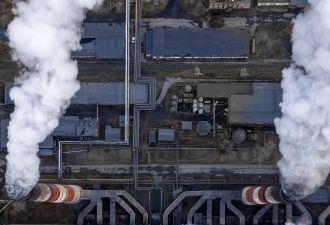
Columbia University's Castaldi said modern gasification systems can be more environmentally sound than older incineration technologies or so-called "mass burn" systems. But as far as the public is concerned, they're still burning garbage, and this conjures up images of big industrial stacks spewing black smoke in the air.
Ethanol, he said, is newer and closer to home. "We all buy gasoline every day." For this reason, it's likely to face less community resistance, he said.
Chornet said communities are more embracing of approaches that can be sold as recycling. Electricity simply doesn't fit that bill - ethanol does. "It's a true chemical recycling of our wastes."
And, by relying on garbage, it won't cause tortilla riots in Mexico.





 41
41
 15
15
 9
9